Preflop Pocket Pairs: Strategy from AA to 22
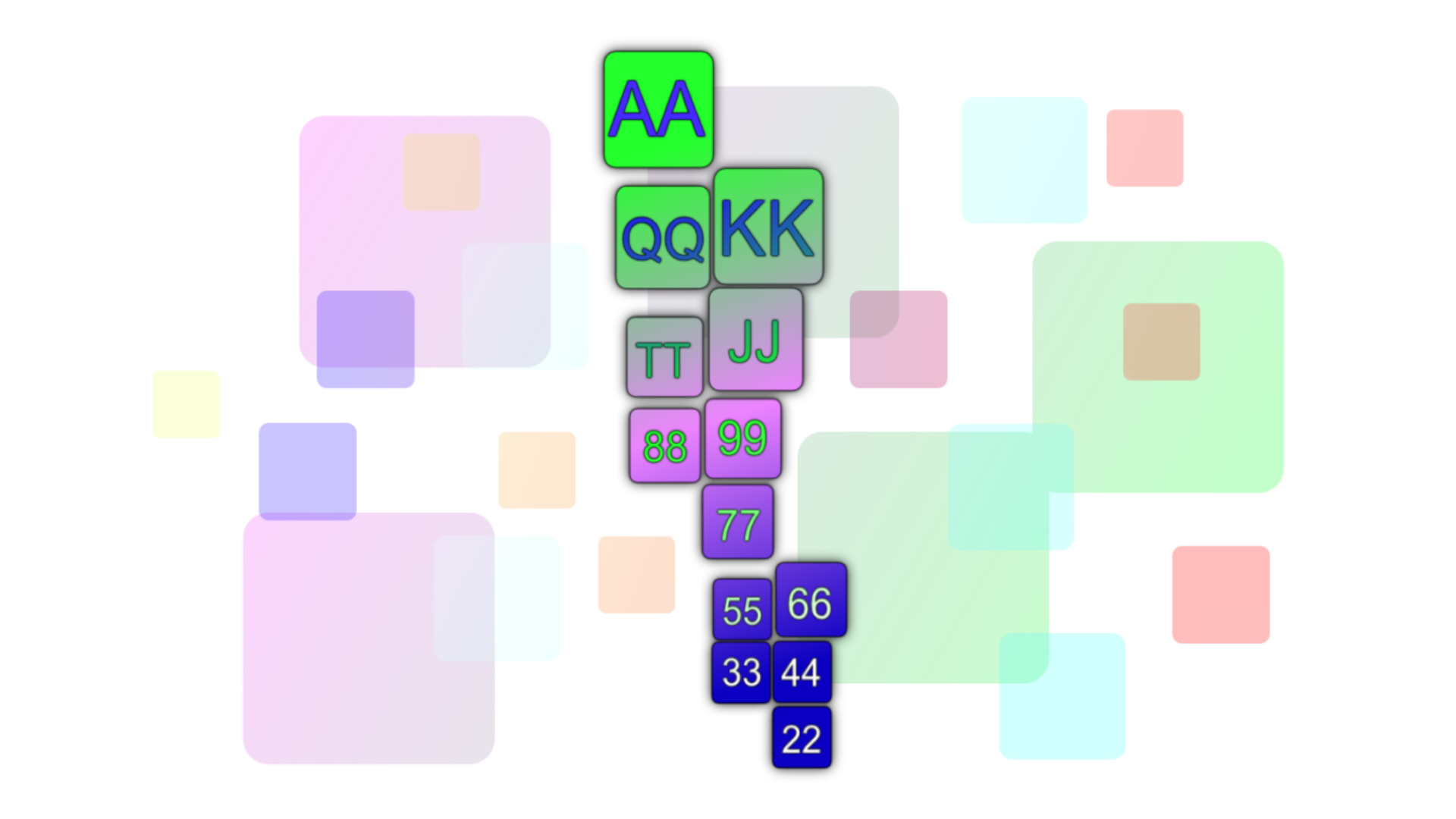
Pocket pairs are a special category of hands. Unlike AK or suited connectors, a pair is already “made” and has strength before the flop. This creates the temptation to play them all the same way—aggressively. However, the strategy with AA and the strategy with 22 are fundamentally different, and confusing them costs players real money.
In this article, we’ll break down all 13 pocket pairs by groups: what to do with each group, why it works that way, and how to use FreeBetRange to practice correct decisions.
A quick note on the math: the probability of flopping a set (three cards of the same rank) with any pocket pair is about 12%—roughly once every 8 hands. This number is important to remember—it will underpin several key decisions below.
Group 1: AA and KK — maximum aggression almost without exceptions
AA and KK are hands you never fold preflop and always use to build the pot. Sounds simple, but in practice the main mistake here is not getting your opponent to pay.
What to do:
- Open: always raise, from all positions
- Vs. a raise: always 3-bet, no exceptions
- Vs. a 3-bet: 4-bet, in most cases all-in or close to it
- Sizing: use your standard sizing—no need to go bigger “to protect your hand”
Common mistake: limping with AA
Some players try to limp with AA or make a min-raise to “trap” opponents. This is a mistake: you waste your equity and don’t build the pot fast enough. The only justified exception is a deliberate limp-reraise in specific live games against particular opponents.
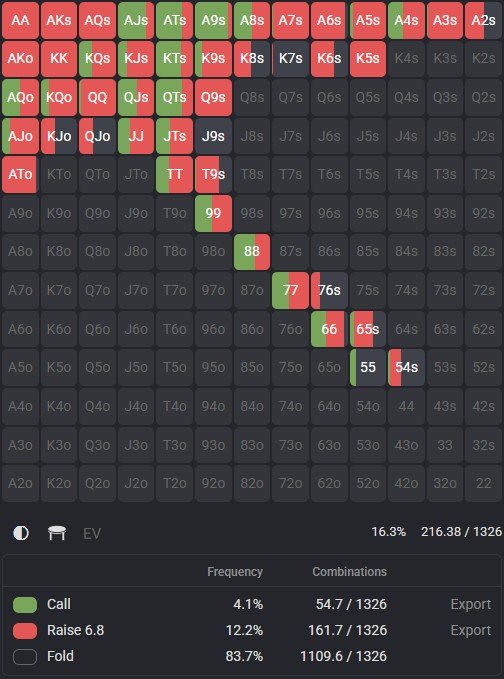
KK vs. a 4-bet
The only non-trivial situation with KK is facing a 4-bet from a very tight opponent whose 4-bet range is suspiciously narrow. In standard online situations, KK is always a call or a 5-bet—never a fold.
Group 2: QQ and JJ — strong, but think it through
QQ and JJ are strong hands that often put players in a tough spot: “what if they have AA or KK?”
QQ: a powerful hand with a nuance
QQ is a value 3-bet almost always. Against most opens, you 3-bet, build the pot, and win more often than you lose. The nuance appears when facing a 4-bet.
How to respond to a 4-bet with QQ:
- Against a wide 4-bet range (a player who frequently 4-bets as a bluff) — call or 5-bet
- Against a very tight 4-bet range (only AA/KK) — sometimes folding is justified, though this is rare online
- In most standard situations — call
JJ: 3-bet more often than call
JJ often tempts players into cold-calling. However, in most positions, 3-betting JJ is better than calling:
- It removes hands like QT, AJ that have decent equity against you
- It allows you to build the pot against ranges where you’re ahead
- It preserves initiative for postflop play
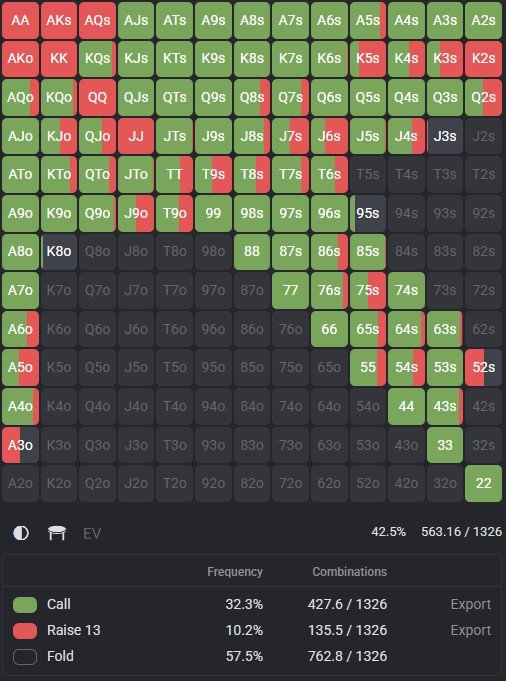
Exception: JJ versus a very tight UTG open in a 9-max game—calling instead of 3-betting can sometimes be justified.
Group 3: TT and 99 — position is everything
TT and 99 are hands where everything depends on the situation. They’re strong enough, but also vulnerable enough, to require positional advantage.
Principle: position matters more than hand “strength”
TT on the BTN and TT from UTG are almost two different situations. In position, you:
- Can build the pot on favorable flops
- Can control pot size on unfavorable ones
- Have information before every decision
From early position, it’s more complicated: if you 3-bet TT and see overcards on the flop, you often end up in a tough spot without a clear plan.
Opening and vs. 3-bet
- Open: TT and 99 are still opened from all positions by default in both 6-max and 9-max (in some cases, 99 can be folded from early positions in full-ring games)
- Vs. a 3-bet: in most cases, 4-betting is suboptimal; calling is preferred. TT/99 aren’t quite strong enough for value 4-bets against most 3-bet ranges. From early positions, folds are sometimes possible.
Group 4: 88, 77, 66 — the transition zone
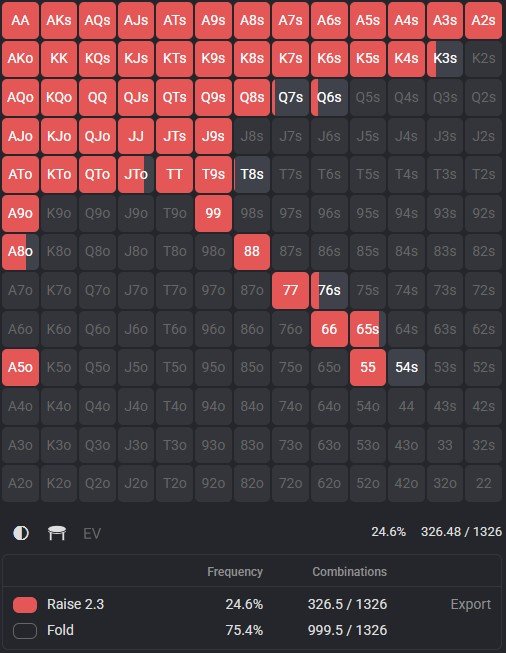
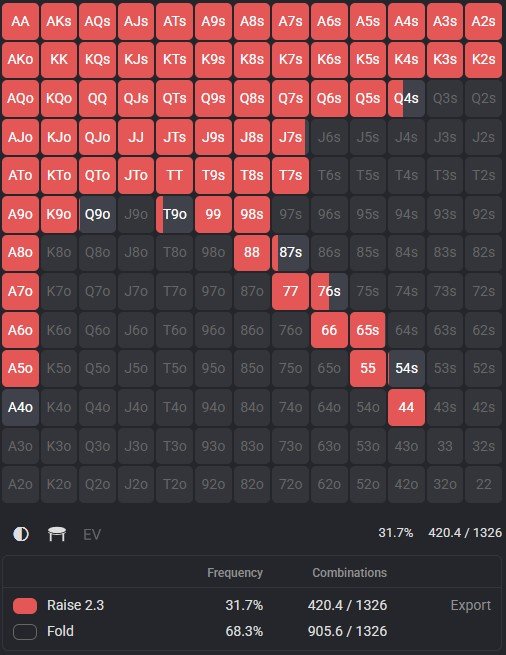
This is where the shift toward “set-mining thinking” begins. These pairs are still strong enough to open from many positions, but they increasingly rely on implied odds when calling.
Open vs. call
Open (RFI): 88–66 are opened from most positions in 6-max. In 9-max, mainly from LJ and later; from earlier positions, they are more often folded.
Call vs. open: All three pairs are good candidates for calling in position with sufficient stack depth. The key condition: there must be enough money behind to justify hitting a set.
Vs. a 3-bet: usually fold or call in position (if implied odds allow), rarely 4-bet.
When to call and when not to
A simple rule: if you call a raise, the effective stack (the smaller of the two stacks) should be at least 15–20 times the size of the call. If you call 10bb, you need a stack of at least 150–200bb—otherwise, set-mining is mathematically unprofitable.
At standard 100bb stacks, this means calling a raise up to 5–6bb is still reasonable, but a large raise to 8–10bb makes calling with 77 questionable.
Group 5: 55, 44, 33, 22 — pure set-mining, position only
Small pairs are the simplest hands strategically, but the hardest in terms of discipline. Discipline is required to avoid overpaying for them.
Core principle: three conditions to play
You should only play small pairs when all three conditions are met:
- You are in position or in the BB (where calling is cheaper)
- Stack depth is sufficient — at least 15–20x your call
- Your opponent is likely to pay you off — for example, they tend to overvalue top pairs and overpairs
If even one condition is not met, folding is usually the correct decision.
Multiway: the best scenario for small pairs
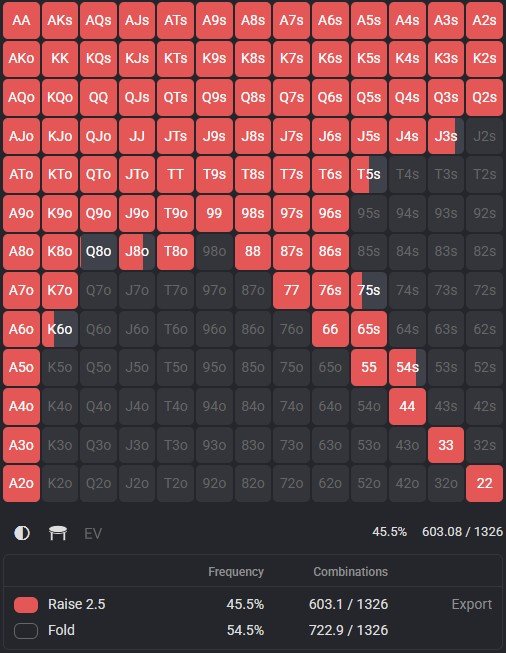
When multiple players are in the pot, small pairs benefit—implied odds improve, because when you flop a set, the pot is larger and you have a chance to get paid by several opponents.
Set-mining: key rules in one place
Since set-mining is important for pairs 22–88, here are the key principles:
Math: you flop a set about 12% of the time. This means that in roughly 7–8 out of 8 hands, you pay to see the flop and don’t improve. Your profit comes from the 12% when you do.
Stack: at least 15x the call size. Calling a 3bb open requires 45bb+ (very manageable), while calling a 10bb 3-bet requires 150bb+ (rare).
Opponent: you want a player who overvalues their hands and will pay you postflop. Against careful, disciplined opponents, implied odds are lower.
Position: set-mining is more effective in position—you control pot size better and have information before acting.
FreeBetRange: how to work with pairs in practice
Knowing the theory is one thing; applying it correctly is another. FreeBetRange helps turn theoretical understanding into practical skill.
What to use:
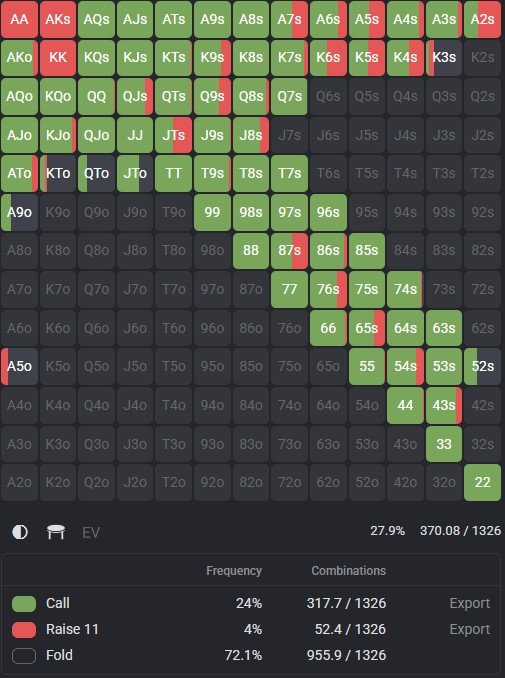
Range Viewer: Open any situation from the library—for example, “3-bet BB vs. CO open”—and see how different pairs are handled. You’ll notice that QQ is played as a raise, 99 as a call or raise, and 44 often as a fold or occasional call. This gives concrete answers instead of abstract rules.
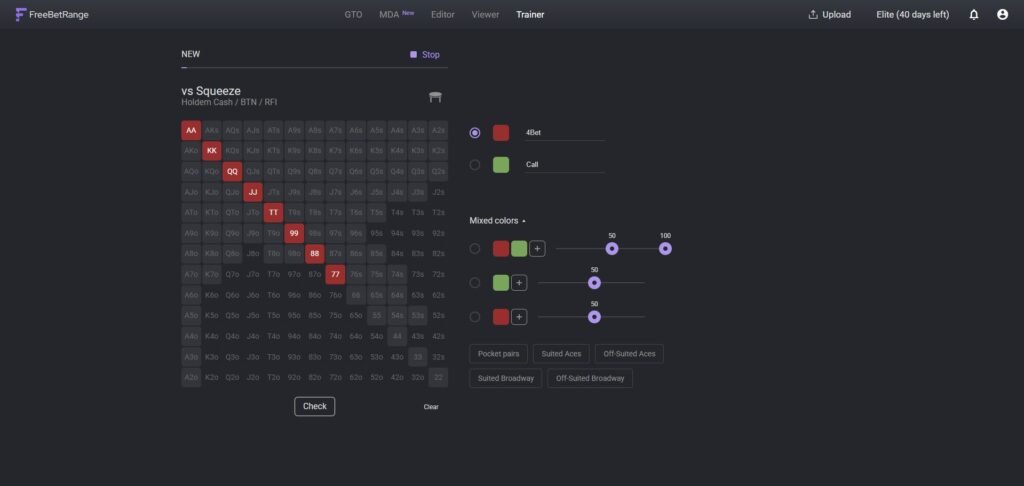
Trainer: The training mode is the best way to automate correct decisions with pairs. Set up a spot (e.g., “CO open”) and practice assigning hands to actions. Pairs that “seem similar” (like 88 vs. 77) but require different actions in a specific situation—this is where those differences really stick.
Editor: If you play in games with non-standard conditions (specific player pool, unusual sizing), create a custom range tailored to your table.
Summary: how to remember the essentials
Pocket pairs are five different strategic decisions, not one:
| Group | Main action | Key rule |
|---|---|---|
| AA, KK | Maximum aggression | Always build the pot, never limp |
| QQ, JJ | Value 3-bet, manage 4-bets | QQ — usually call vs. 4-bet; JJ — 3-bet preferred over call |
| TT, 99 | Positional play | 3-bet or call depending on position; 4-bet rarely |
| 88–66 | Transition to implied odds | Call with sufficient stack depth; rarely 3-bet |
| 55–22 | Pure set-mining | Three conditions: position + stack + opponent type |
Practice these decisions in FreeBetRange—from understanding the rules to making automatic decisions at the table.

Master GTO preflop strategy, build your own ranges, and train smarter — all in one powerful tool.
Try FreeBetRange