Suited Connectors Preflop: When and How to Play
Suited connectors are among the most discussed hands in poker strategy. There’s a lot of debate around them: some players play them everywhere just because they “look pretty,” while others avoid them due to high variance. Both approaches are wrong. These hands have clear conditions under which they become profitable, and clear situations where they turn into chip leaks. In this guide, we’ll break down everything: where the value of suited connectors comes from, how the correct decision depends on position and stack depth, when to use them in 3-bets—and why multiway isn’t always a story about big wins.
What suited connectors are and why they’re special
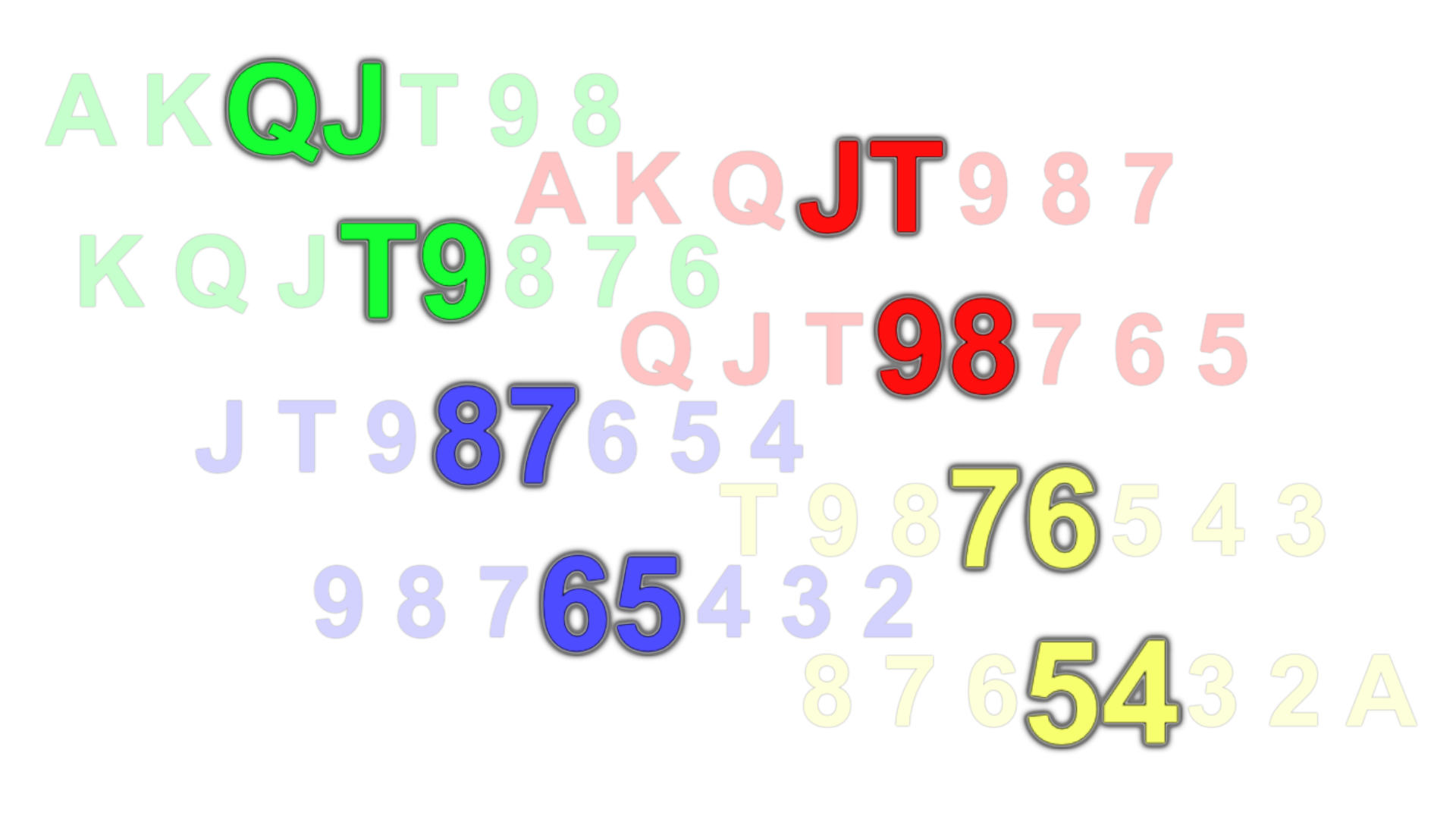
Suited connectors are cards of the same suit with consecutive ranks. The classic list looks like this: 54s, 65s, 76s, 87s, 98s, T9s, JTs, QJs. Sometimes KQs is included as well, although this hand is closer to premium Broadway in nature.
How are they different from most other hands?
Most hands make money through raw strength: AA, KK, AK—these hands start with strong equity and win more often simply because they’re stronger. Suited connectors work differently: they don’t often win at showdown “by default,” but they can create disguised monsters—straights, flushes, two pairs—that opponents don’t expect and will pay off heavily.
That’s why people often say: big hands win small pots, small hands win big pots.
Three sources of value for suited connectors
Before discussing when to play suited connectors, it’s important to understand how they actually make money.
1. Implied odds
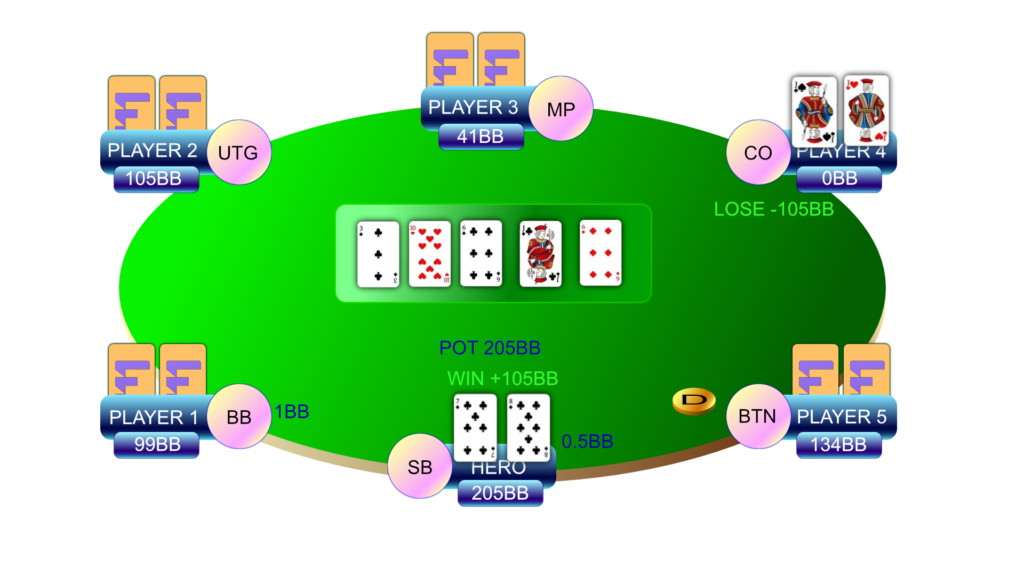
The idea is simple: you invest a little now, hoping to win a lot later. If you call 3bb and hit a nut flush, an opponent with top pair top kicker might pay you 60–80bb—that’s implied odds in action.
2. Draw equity on the flop
Suited connectors often flop strong draws: open-ended straight draws, flush draws, and combo draws (straight + flush). This creates opportunities for semi-bluffing—you can apply pressure with high equity even without a made hand.
3. Range disguise
When you show aggression on a 9♥T♥6♠ flop, your opponent doesn’t expect you to have 87s—the nut straight. Suited connectors create hard-to-read hands.
Which positions to open suited connectors from
Position is the key factor when playing suited connectors. Not because “the books say so,” but because these hands require postflop realization—and realizing equity after the flop is much easier in position (when you act last).
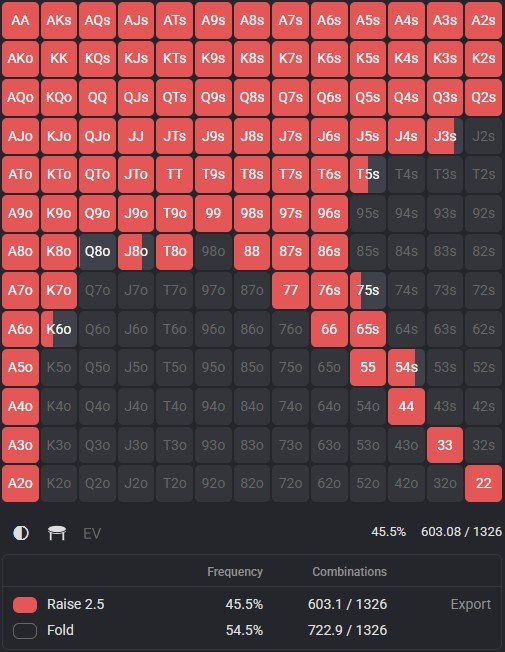
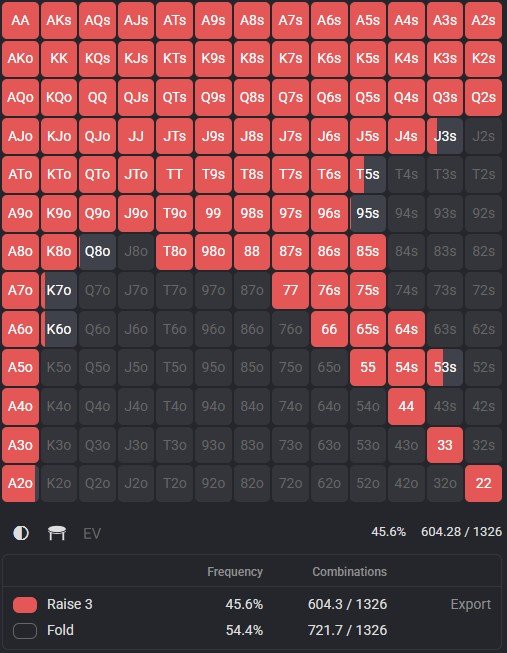
Late positions: your territory
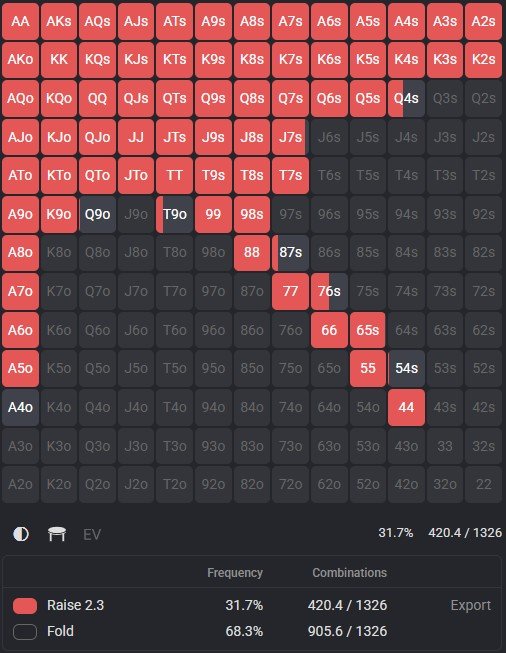
BTN (button) is the ideal position for suited connectors. You’ll be in position against everyone else. Open confidently: 54s, 65s, 76s, 87s, 98s, T9s, JTs—all are part of a standard BTN opening range with deep stacks.
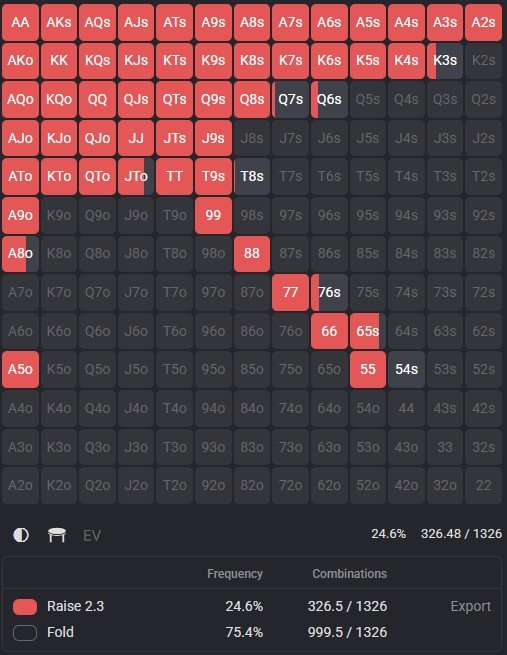
CO (cutoff) is also a strong spot. Open 98s and higher comfortably, while lower connectors become more marginal. If BTN and the blinds are tight and predictable, you can widen your range.
Middle and early positions: caution
HJ (hijack) is a middle position. Higher connectors are included in the opening range (starting from T9s and up). Lower connectors are typically not played by default.
UTG — in standard GTO ranges from early position, only premium suited Broadway connectors like JTs and above are played. The issue isn’t the hand strength, but the high chance of being out of position against multiple opponents. Suited connectors perform poorly out of position.
Blinds: a special case
BB — although you’re out of position, you’ve already invested 1bb, so your pot odds are better. In standard BB defense ranges, suited connectors are called quite widely—from 43s and up against many positions.
SB — one of the toughest positions in poker. You’re out of position against the BB, but can be relatively better positioned against early positions when there are limpers. Decisions with suited connectors from the SB depend heavily on the specific situation.
Stack depth: minimum, optimal, maximum
This is probably the most important technical factor for suited connectors.
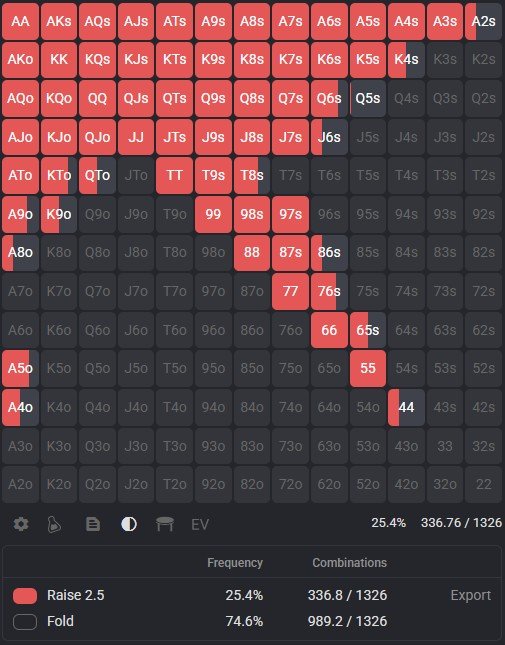
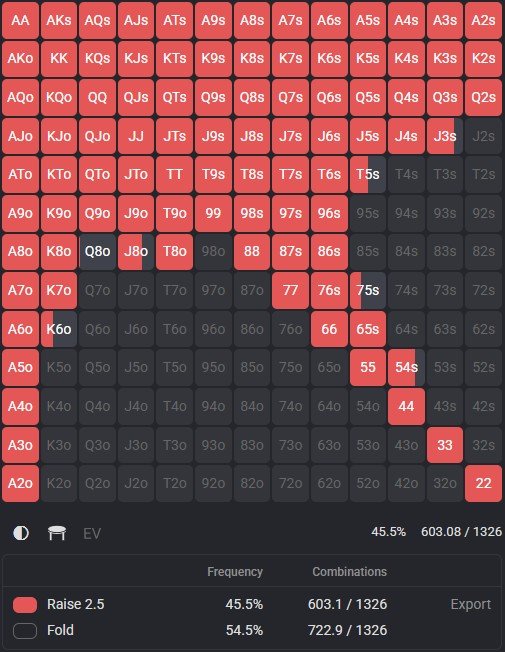
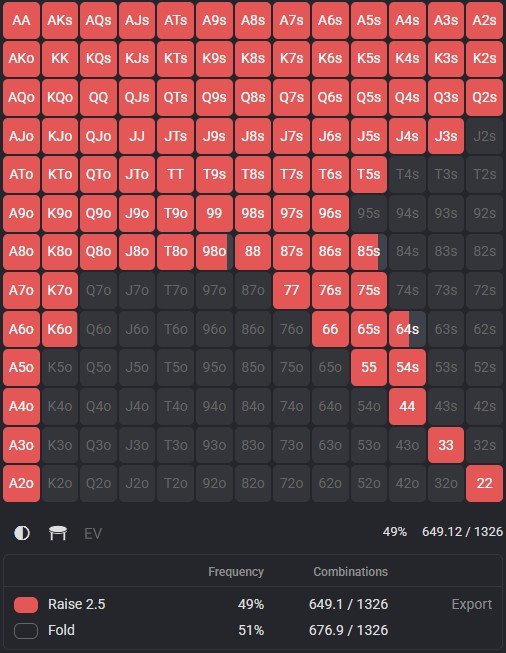
At 100bb stacks (standard)
Optimal conditions. There’s enough room for postflop maneuvering, and implied odds work to their fullest. Open and call suited connectors according to positional ranges.
At 50–60bb stacks
Conditions worsen. The SPR on the flop will be low, making draw realization harder. Lower suited connectors (54s–76s) should be removed from your ranges. Higher ones (98s, T9s, JTs) can remain in late positions.
Below 30–40bb stacks
Suited connectors essentially lose their core strength. There’s no room for postflop play and no implied odds. In this zone, they’re just hands with mediocre raw equity. Fold most of them or use only the strongest ones (like JTs, sometimes T9s) in push/fold situations.
At 150bb+ stacks
Suited connectors gain additional value. Implied odds are at their peak. A wider selection becomes viable even from HJ and CO.
Multiway vs heads-up: different value for the same hand
Many players think: the more opponents, the better for suited connectors—more people to pay you off. That’s true, but only partially.
Arguments in favor of multiway
- More players = higher implied odds when you hit the nuts
- Hands like 76s can outperform even AK in equity against ranges like {QQ, AKo}, because suited connectors perform well against multiple hands simultaneously
- You rarely face “kicker problems” when you hit a straight or flush
Arguments against multiway (reverse implied odds)
- Your flush may not be the nuts—someone else could have a higher one
- Your straight can be beaten by a higher straight or a flush
- Being out of position in a multiway pot without initiative is very uncomfortable
Key takeaway: Play suited connectors in multiway pots in position and with deep stacks. If you’re out of position in a multiway pot—be cautious.
When to 3-bet suited connectors
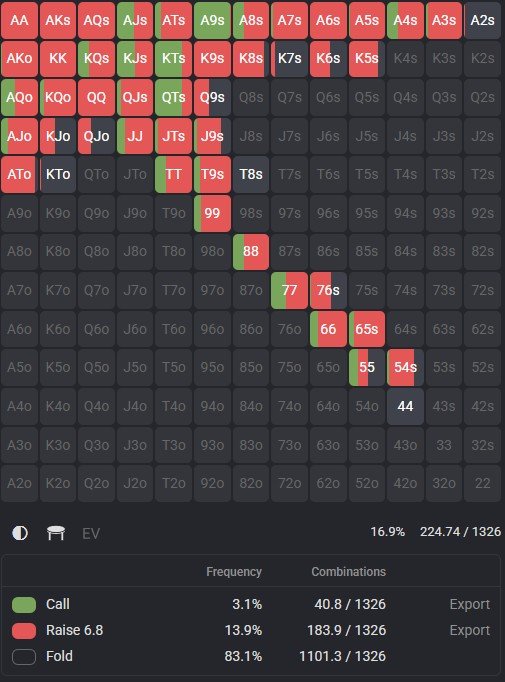
3-betting suited connectors is almost always a bluff or semi-bluff used to balance your 3-bet range. The logic: you 3-bet either for value (AA, KK, QQ) or with hands that can either win the pot preflop or have strong postflop potential when called.
Suited connectors are perfect for the bluff portion, and they realize equity well when called.
When a 3-bet is justified:
- You are in position (BTN vs CO/HJ)
- Your opponent folds to 3-bets frequently (55%+)
- Stacks are deep (80bb+)
- Your opponent is not a calling station
When a 3-bet is risky:
- You are out of position (SB vs BTN)
- Stacks are shallow (< 50bb): if called, SPR will be too low
- Your opponent calls 3-bets frequently
Common mistakes and how to avoid them
Mistake 1: Overvaluing suited connectors out of position in multiway pots
For example, there’s a raise and a call before you, and you have 87s in the SB—is it a perfect spot? No. You’re out of position, without initiative, against multiple opponents, and your flush might not be the nuts. Be cautious and adjust to your opponents.
Mistake 2: Playing suited gappers like suited connectors
Hands like 86s, 97s, T8s are suited gappers, and they’re weaker: fewer straight possibilities on the flop. Play them in more restricted situations.
Mistake 3: Ignoring the opponent’s open size
Against a 4bb open, your pot odds for calling are worse, so your calling range should be tighter. Often, suited connectors below 87s–98s become unprofitable against larger sizing.
Practicing suited connectors in FreeBetRange
FreeBetRange allows you to study suited connectors in a very practical way.
1. GTO Library — review correct ranges Open the Library, choose a position (BTN, CO, HJ) and stack depth (100bb). See which suited connectors are included in the opening range, 3-bet range, and calling range against different positions.
2. Editor — build a custom range If you’re playing at a table with several loose passive players, you can adapt standard ranges: add suited connectors to your BB calling range, remove bluff 3-bets with them from the SB, etc. We recommend checking out our separate guide on building your own preflop strategy.
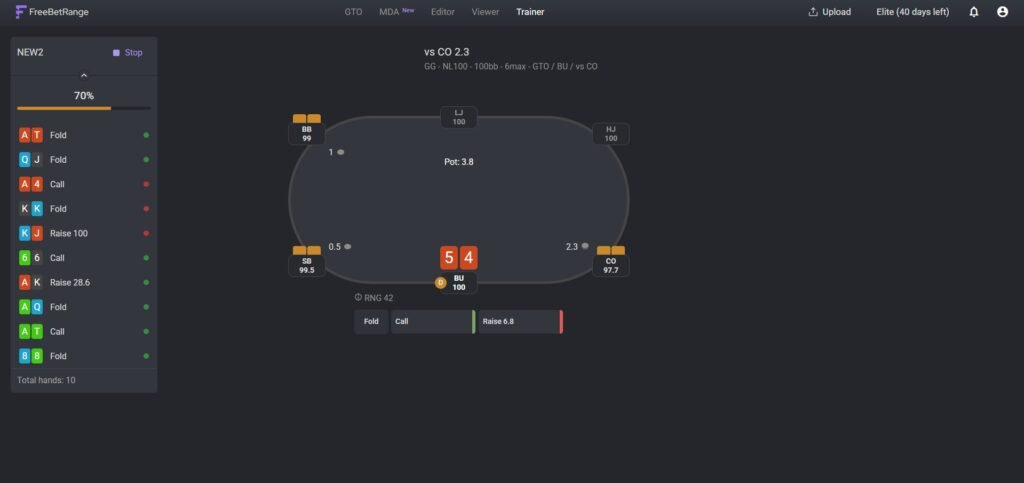
3. Trainer — practice decision-making Imagine: CO opens to 2.5bb, you’re on the BTN with 54s. What do you do? Make your decision, and the trainer will show the correct answer and explain what you did wrong. It also tracks your stats, so you can see which situations with connectors are the most challenging for you.
How it all comes together
Suited connectors are hands that only perform well when the right conditions are in place. They don’t forgive contextual mistakes: playing them from the wrong position or at the wrong stack depth often just means paying for a pretty hand and missing the flop.
The key to playing them profitably is simple, but requires discipline: late position gives you postflop maneuverability and pot control; deep stacks provide the implied odds that justify entering the pot; 3-bets with them work only in position and against players who fold. Everything else is either too marginal or simply a mistake.
If you want to make these decisions automatic, you don’t need to memorize dozens of scenarios. In the FreeBetRange GTO Library, you can quickly see how suited connector ranges change from BTN to UTG and at what stack depth they disappear from opening ranges. The FreeBetRange Trainer lets you practice specific situations in a real decision-making format—that’s how real confidence at the table is built, not by rereading articles.

Master GTO preflop strategy, build your own ranges, and train smarter — all in one powerful tool.
Try FreeBetRange