VPIP and PFR: What These Stats Say About Every Player at the Table
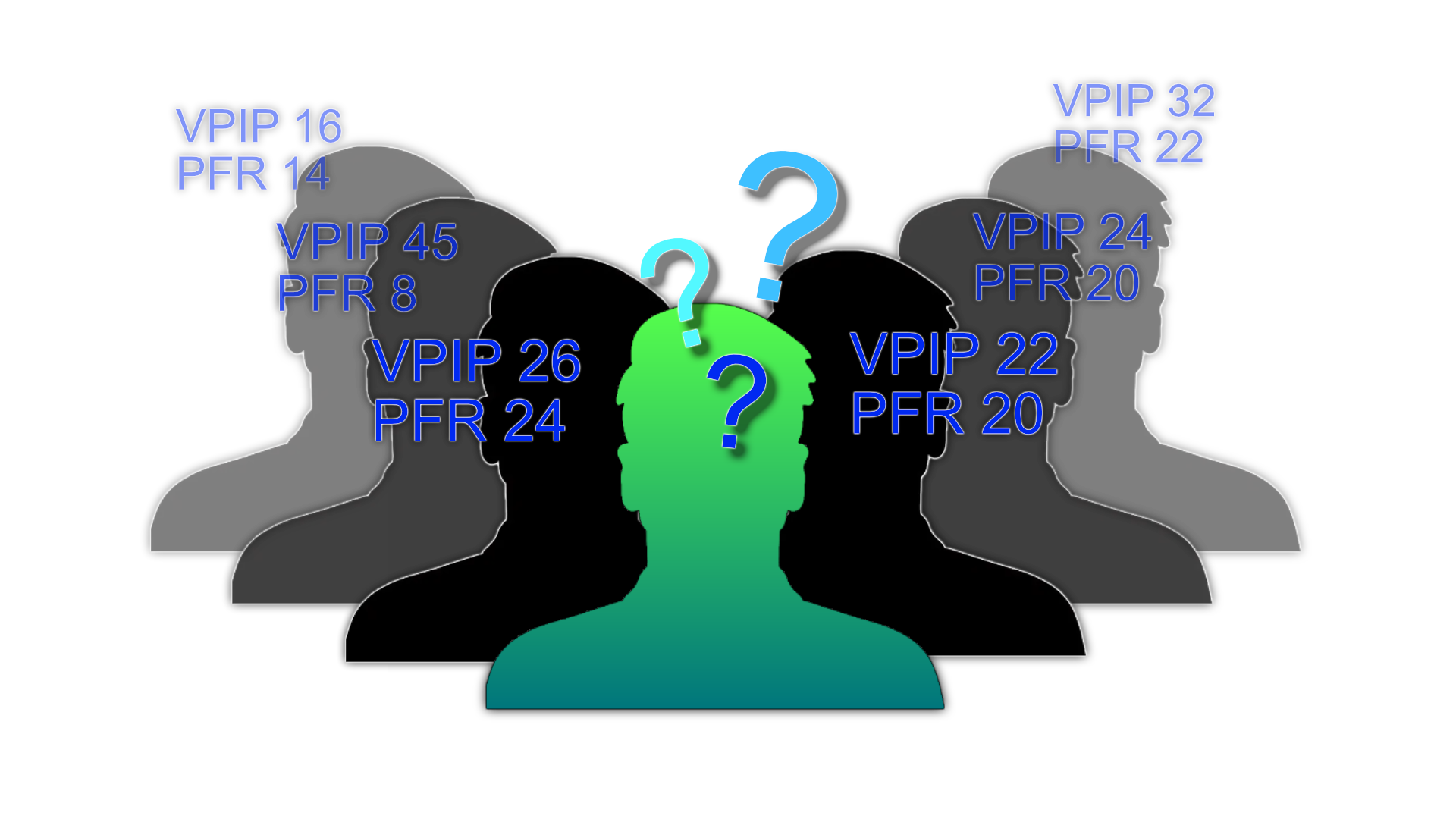
If you play online poker with a HUD, you constantly see numbers above your opponents’ avatars. Among all these stats, two stand out — VPIP and PFR. These are the ones that give you the first and most important answer to the question: who is sitting across from you?
One player enters every second hand and never raises. Another plays rarely, but always with a raise. A third sits somewhere in between — and that’s a good thing. Two numbers — and you already understand your opponent’s style, their range, and how to play against them. In this article, we’ll break down VPIP and PFR separately, explain the relationship between them, and show how to turn these stats into a concrete strategy at the table.
Why these stats matter
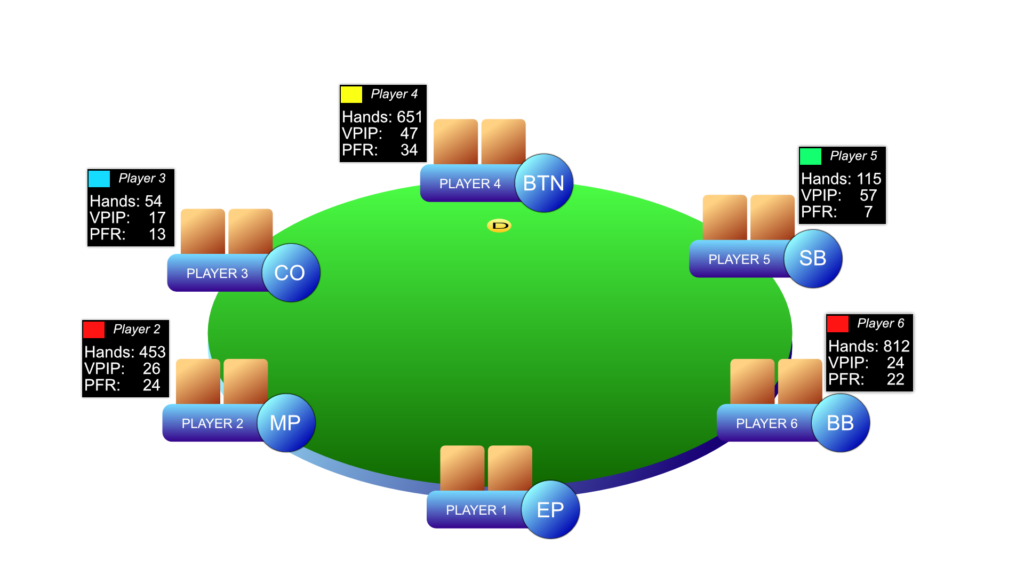
When you play online with a HUD (software that displays stats directly at the table), you see a small block of numbers above each player. The very first and most important ones are VPIP and PFR.
They answer two key questions:
- How wide does the opponent play preflop?
- How aggressively do they play?
Two numbers — and you can already roughly tell who you’re dealing with: a professional regular, a passive fish, or an ultra-tight nit.
VPIP: how wide your opponent plays
VPIP stands for Voluntarily Put Money In Pot — and shows the percentage of hands in which a player voluntarily puts money from their stack into the pot.
Simple formula:
(Number of hands in which the player raised or called preflop) / (Number of hands in which the player took any action preflop) * 100This includes:
- Any call, including limps,
- Any raise.
What does NOT count: the big blind when no one has raised — in this case, the player simply checks without making an active decision.
What VPIP numbers mean
| VPIP | Interpretation |
|---|---|
| up to 15% | Very tight — plays only strong hands |
| 15–22% | Tight — typical nit or conservative reg in 9-max |
| 22–30% | Standard for a winning regular in 6-max online |
| 30–40% | Loose — plays many hands, including weak ones |
| 40%+ | Very loose — fish or aggressive maniac |
An important nuance: VPIP is an average across all positions. A good regular with a VPIP of 24% plays very differently from UTG (tight) and from the BTN (wide). That’s why experienced players look at positional VPIP separately.
PFR: how aggressive your opponent is
PFR — Preflop Raise — is the percentage of hands in which a player raises before the flop.
This includes any raise made preflop.
Formula:
(Number of hands in which the player raised preflop) / (Number of hands in which the player took any action preflop) * 100Key rule: PFR is always less than or equal to VPIP. You can’t raise more often than you enter the pot.
VPIP vs PFR: what the gap tells you
The gap between the two numbers reflects how often the player takes passive actions: limps and calls without raising.
Example:
- VPIP 28 / PFR 22 → gap 6 → moderate number of calls, aggressive style
- VPIP 42 / PFR 8 → gap 34 → lots of limps and calls, passive style
A small gap (3–6) means the player usually enters the pot with a raise — their range is aggressive.
A large gap (15+) means the player likes to limp and call — their range is wide and passive.
Standard VPIP/PFR values by format
6-max online (most common format)
Typical stats for a winning regular:
| Stat | Typical range |
|---|---|
| VPIP | 22–28% |
| PFR | 18–24% |
| Gap (VPIP − PFR) | 3–6 |
9-max / full ring online
| Stat | Typical range |
|---|---|
| VPIP | 15–20% |
| PFR | 12–17% |
| Gap (VPIP − PFR) | 3–5 |
Why are the numbers lower in 9-max?
With 9 players at the table, the chance that someone holds a strong hand is significantly higher. That’s why from early positions (UTG, UTG+1), players only play very strong hands, which pulls the overall VPIP down.
Live poker (casino)
In live poker, the norms shift by about +5–8% VPIP because:
- The game is slower, and hands are more “expensive” in terms of time
- The player pool is weaker, so you can win with wider ranges
- There is no HUD — players play less optimally
Four player types through VPIP/PFR
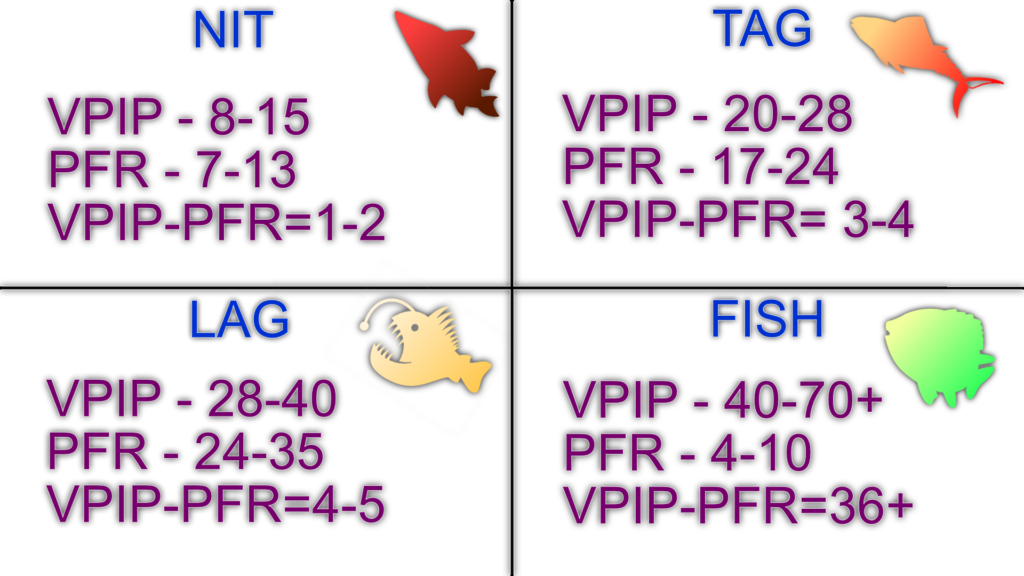
1. TAG — tight-aggressive (typical regular)
VPIP 20–28 / PFR 17–24
Enters the pot with a solid range, almost always with a raise. The standard winning style online.
How to play against: play carefully, respect their raises, look for exploits using additional stats.
2. LAG — loose-aggressive
VPIP 28–40 / PFR 24–35
Wide and aggressive. Could be a skilled LAG (tough opponent) or just an unbalanced player with leaks.
How to play against: don’t overfold to bluffs, 4-bet more often, trap with strong hands.
3. Nit
VPIP 8–15 / PFR 7–13
Plays almost only very strong hands. Easy to read.
How to play against: fold easily against their raises, steal blinds aggressively.
4. Fish / passive caller
VPIP 40–70+ / PFR 4–10
Loose and passive. Enters pots with almost anything, rarely raises. The ideal opponent for value.
How to play against: value bet widely, minimize bluffs, isolate limpers.
How to use VPIP/PFR at the table
Step 1: Identify the player type
See VPIP 52 / PFR 9? That’s a passive caller. Forget bluffs, bet only for value.
See VPIP 14 / PFR 12? That’s a nit. Their raise means strength. Fold everything but monsters.
Step 2: Adjust your range
Against a loose passive player: widen your value range, reduce bluffs.
Against a tight player: steal blinds more often, respect raises.
Step 3: Consider position
Always interpret VPIP/PFR in context. VPIP 45 from the BTN is normal. VPIP 45 from UTG is a loose player with a questionable range.
Step 4: Compare with real ranges using MDA
Knowing the player type is the first step. The next step is understanding what exactly they actually play in each specific spot. This is where the MDA section in FreeBetRange comes in.
MDA in FreeBetRange: real ranges based on VPIP/PFR
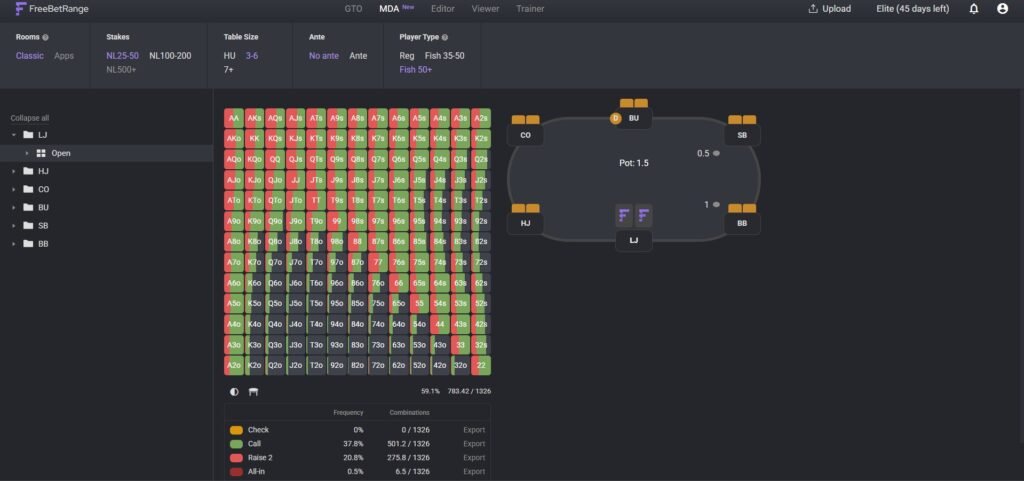
MDA (Mass Data Analysis) is a section of FreeBetRange that contains real preflop ranges built from the analysis of more than 300 million real hands from online cash games. This isn’t theory or solver output — it’s what different types of players actually do at the table.
The key feature of this section: players are classified specifically by VPIP and PFR. This creates a direct connection between the stats in your HUD and the ranges in the tool.
How MDA classifies players by VPIP/PFR
FreeBetRange uses the following thresholds to define archetypes:
| Archetype | Table format | Criteria |
|---|---|---|
| Regular | 3–6 max (shorthanded) | VPIP < 35, PFR < 30, gap 0–15 |
| Regular | 7+ max (full ring) | VPIP < 30, PFR < 25, gap 0–12 |
| Fish (moderate) | any | VPIP 35–49 |
| Fish (loose) | any | VPIP 50+ |
This means that when you see VPIP 42 in your HUD, that’s no longer a regular by real database standards — it’s a level-one fish. VPIP 55 is a level-two fish. And for each of these archetypes, MDA provides a separate tree of real decisions for all positions and situations.
MDA filters: fine-tuning for your game
In addition to player type, MDA lets you refine the context:
- Rooms: traditional (PokerStars, GG, WPN, 888) or poker apps (PokerBros, PPPoker, etc.)
- Limits: NL25–50, NL100–200, NL500+
- Table size: heads-up, 3–6 max, 7+ max
- Antes: with or without antes
This matters: a fish at NL25 in a poker app can play very differently from a fish at NL200 on PokerStars. MDA accounts for these differences.
How to apply MDA using VPIP/PFR
A practical approach:
1. Identify the archetype using VPIP from your HUD An opponent with VPIP 47 falls into the “Fish 35–49” category. An opponent with VPIP 22 and PFR 18 is a regular in 6-max.
2. Open MDA with the correct filters Select your limit, table size, and opponent archetype. The decision tree will update automatically.
3. Study the real range in the specific spot For example: how does a fish with VPIP 47 respond to a CO open? What exactly do they call with, and what do they fold? This is no longer a guess — it’s data from real hands.
4. Build a strategy against the actual range Any range from MDA can be exported in one click and loaded into a solver to calculate the optimal counter-strategy.
Why MDA is more accurate than GTO assumptions about fish
GTO ranges describe how an ideal player should play. But fish don’t play that way. The difference between a fish’s real range and a GTO range in the same spot can be massive.
When you build a counter-strategy against a GTO range instead of a fish’s actual range, you’re analyzing an opponent that doesn’t exist. MDA solves this problem: you work with what actually happens at the table.
The FreeBetRange database is updated every six months, so the ranges reflect current pool tendencies rather than outdated data.
Conclusion
VPIP and PFR are two numbers that compress a player’s preflop behavior into a clear profile. VPIP shows how wide they enter pots. PFR shows how aggressive they are. The gap between them reveals whether they prefer raising or just calling and limping.
With just these two stats, you can already identify who you’re facing: a tight-aggressive regular, a wide LAG, a passive nit, or a fish who plays almost anything. And that means you already know the baseline strategy against them before the flop.
The next level is moving from numbers to actual ranges. That’s exactly what the MDA section in FreeBetRange is for: it directly uses VPIP as a classification criterion and provides real preflop ranges for each archetype, built from over 300 million hands. Not theory — but what your opponent actually plays in each specific spot.

Master GTO preflop strategy, build your own ranges, and train smarter — all in one powerful tool.
Try FreeBetRange