Preflop Sizing: How to Choose the Right Opening Size

You sit down at the table, look at your cards, and raise. How much? Often this decision is made automatically — “3bb, as usual” or “2.5bb because I saw it somewhere.” But your opening size is not a formality or a habit. It’s the first strategic decision in every hand, and it shapes everything that follows: who enters the pot and with what, how big the pot will be on the flop, how often you’ll get 3-bet. Let’s break it down step by step: what these numbers actually mean, why they differ by position and format, and how your opponent’s sizing should affect your defense.
Why sizing matters at all
Many players choose their opening size out of habit: “everyone raises to 3bb, so I will too.” But sizing is not tradition — it’s a tool. It affects who enters the pot, with which hands, and how the postflop will play out.
Too small a raise — you give your opponents attractive pot odds, multiple players enter the pot with various hands, and postflop turns into a multiway lottery.
Too large — you risk too much with marginal hands, while also building a big pot where you often don’t have an edge.
The goal of sizing is to maximize the EV of your entire range, not just a single hand.
Basic standards: 2bb, 2.5bb, 3bb — when to use each
These three sizes aren’t random. Each one has a specific logic behind it.
2bb (min-raise)
The smallest commonly used size. It’s used:
- Online from early positions (UTG, MP) — solvers often recommend this
- In tournaments when stacks get shorter (25–30 big blinds)
- When you want to enter the pot cheaply while keeping the option to fold to a 3-bet without losing much
Why do GTO solvers often choose 2bb from UTG? Because most hands in your range have higher EV with a smaller raise. A larger size more often invites a 3-bet, and facing a 3-bet with AQs or KQs from UTG is a losing situation. The min-raise minimizes this risk.
2.5bb
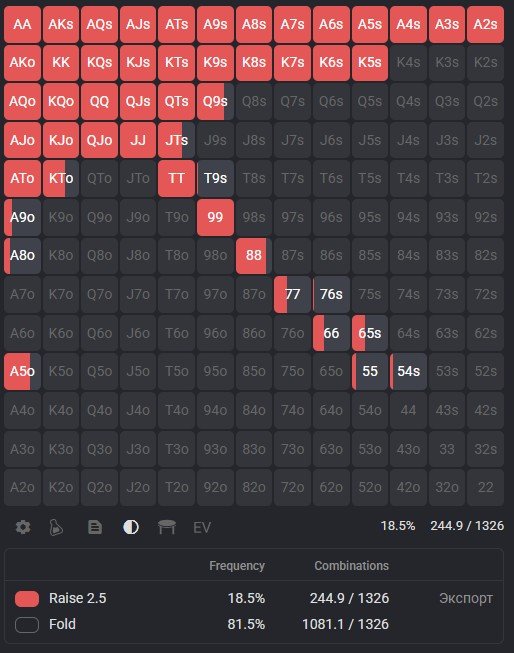
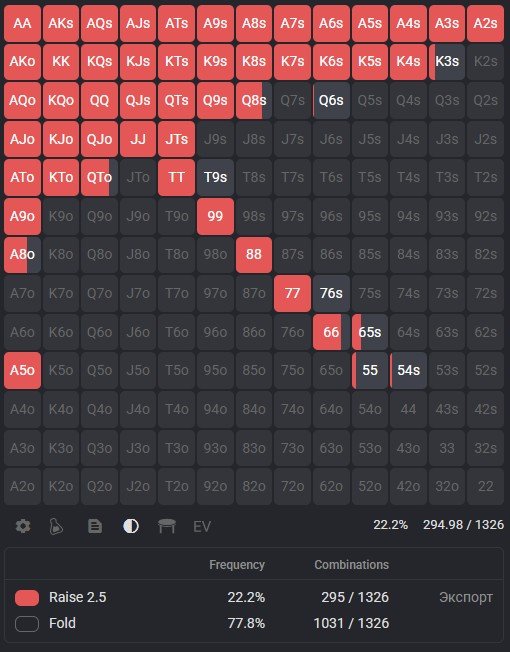
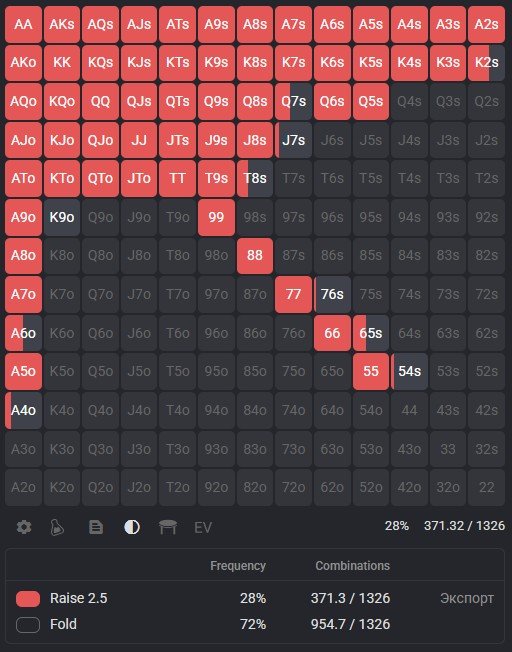
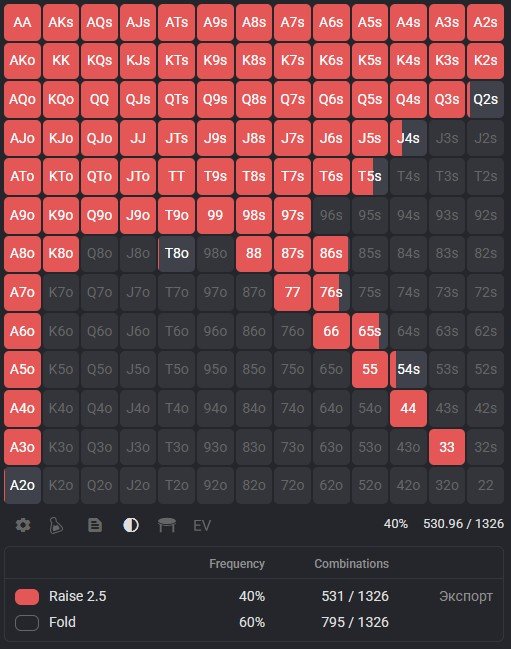
The most common standard in online poker. It’s used:
- From almost all positions in 6-max cash games
- In 9-max from middle and late positions
- In tournaments with deep stacks (70bb+)
It’s a compromise: large enough to make opponents fold trash, but not so large that it invites frequent 3-bets or bloats the pot unnecessarily.
3bb and larger
Used:
- From the small blind (SB) — you’ll always be out of position postflop, and the big blind gets good calling odds, so you need to prevent cheap دفاع of their blind
- In live poker with passive player pools
- To isolate limpers (3bb + 1bb per limper)
- In early tournament stages, some players prefer 2.5–3bb
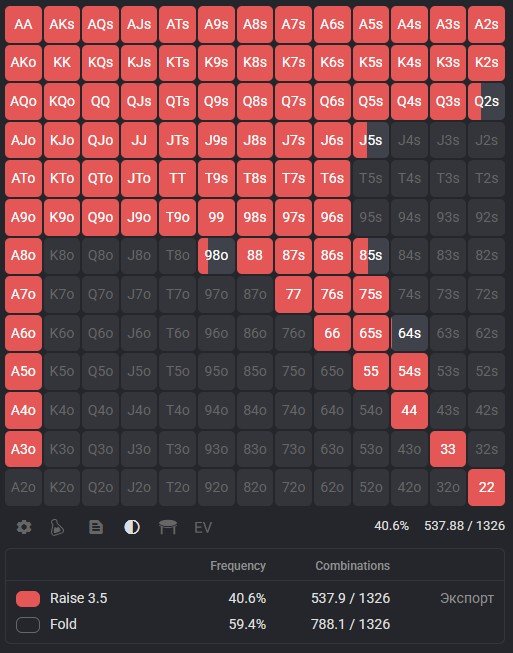
Position and sizing: the logic behind it
Position affects sizing through two mechanisms.
First: the earlier you act, the more players can 3-bet you. From UTG, there are still 8 opponents left to act. That’s eight times more chances to face an unwanted 3-bet. So from early positions, it makes sense to use a smaller raise — your range is tighter, and the risk is lower.
Second: your range on the BTN is wider — it includes weaker hands that don’t want to be called by multiple players. These hands need fold equity. That’s why the BTN can use a slightly larger size, especially for the weakest parts of the range.
In practice, the difference between positions is small — within the 2–2.5bb range. This doesn’t mean raising 2bb from UTG and 4bb from BTN. A solid baseline is: 2–2.2bb from early positions, 2.5bb from middle and BTN, 3bb from SB.
One sizing per range: why it’s critical
A core GTO principle that many players violate: your raise size should not depend on your specific hand.
If you open AA to 4bb and KQs to 2.5bb from the same position, an experienced reg will spot the pattern and exploit you. They’ll start 3-betting your smaller opens wide and folding to larger ones, knowing you’re strong.
The GTO standard is a fixed sizing for each position, applied to your entire range. AA, KQs, and J4s from the BTN all use the same raise — for example, 2.5bb. This keeps your range opaque to opponents.
Online vs live poker: different standards
Online poker has standardized smaller opening sizes (2–2.5bb) because player pools are stronger, players understand pot odds, and defend properly. A larger raise doesn’t generate much more fold equity, but it does increase the risk of facing a 3-bet.
In live poker, it’s different: players are often insensitive to bet sizing in relative terms — most focus on the absolute dollar amount. This creates an incentive for larger openings — 3–4bb or more — because call frequency doesn’t change much, but the pot grows, increasing value for your strong hands.
In practice: in a passive live player pool, opening to 4–5bb with AA on the BTN often gets called at a similar rate as 2.5bb, but builds a pot twice as big.
How your opponent’s sizing affects your defense
Understanding this is what separates a thinking player.
When facing larger opens, you should defend tighter. Why? Because you’re getting worse pot odds, and it becomes harder to realize equity with weaker hands.
Specifically:
- Against 2bb, you can call very wide from the BB
- Against 3bb, your calling range becomes significantly tighter — weak offsuit hands and some low suited hands drop out
- Against 4–5bb, only strong hands and good suited hands that realize equity well continue
This directly changes how you build your strategy against different opponents.
| Opponent Open Size | Your Call Frequency | Your 3-Bet Frequency | Your Range |
|---|---|---|---|
| 2bb | Maximum | Polarized, wide | Very wide |
| 2.5bb | Standard | Polarized | Standard |
| 3bb | Below standard | Narrower bluffing | Tighter |
| 4–5bb | Only strongest + good equity hands | Almost none | Much tighter |
Sizing in FreeBetRange ranges
Ranges in FreeBetRange are tied to specific opening sizes. This is important: a CO range for 2bb and a range for 3bb are different ranges. You can’t just take a range and change the raise size on a whim — you’ll fall out of balance.
In FreeBetRange, you’ll see:
- Opening ranges for each position
- The recommended sizing tied to them
- Mixed strategies (mixed actions) for borderline hands
In Trainer mode, you practice not only hand selection but also the correct opening size — helping you build automatic habits before you sit down at the table.
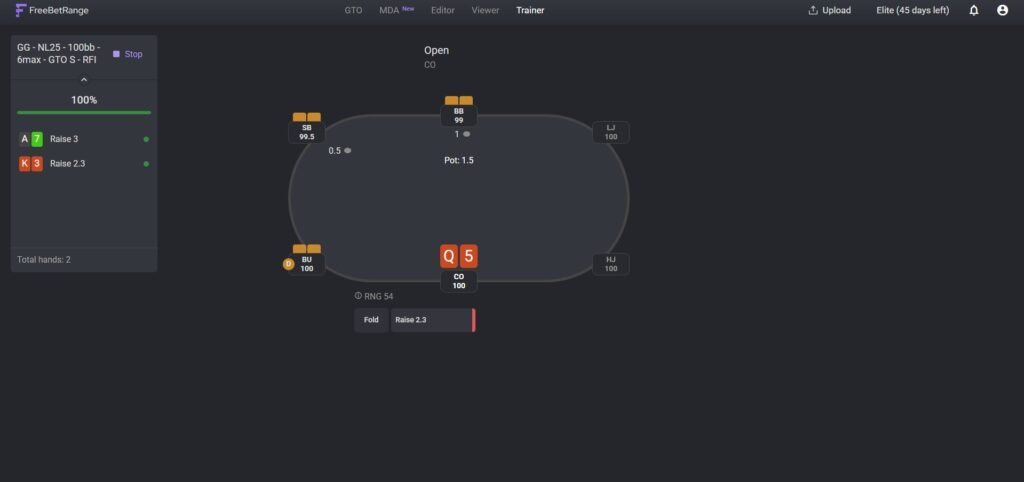
Quick checklist: what to consider when choosing a sizing
Before opening, ask yourself three questions:
- What’s my position? — Early? Smaller. Late? Slightly bigger. SB? 3bb+.
- Online or live? — Live pools are less sensitive to sizing → you can open larger with strong hands.
- Who’s in the blinds? — Aggressive reg (frequent 3-bets) → smaller sizing. Passive recreational → you can go bigger.
And most importantly: don’t change your size based on your cards.
Recommended sizing summary table
| Position | Online (6-max, 100bb) | Live poker (passive pool) | Tournaments (100bb) |
|---|---|---|---|
| UTG | 2–2.2bb | 3–4bb | 2.2–2.5bb |
| UTG+1 | 2–2.2bb | 3–4bb | 2.2–2.5bb |
| MP/LJ | 2.2bb | 3bb | 2.2–2.5bb |
| HJ | 2.2–2.5bb | 3bb | 2.5bb |
| CO | 2.5bb | 3–3.5bb | 2.5bb |
| BTN | 2.5bb | 3bb | 2.5bb |
| SB | 3bb | 3–4bb | 3bb |
Conclusion
Opening size is a simple parameter with complex consequences. Small changes of 0.5bb can shift 3-bet frequencies, opponent ranges, and your EV. Learn the standard sizes for your format, stick to consistent sizing by position, and work with FreeBetRange — where ranges are already aligned with the correct sizes.
It’s also worth mentioning adjustments: the rules above are not rigid dogma, but a starting point. Once you understand the logic behind each number, you can deviate when it makes sense. A passive live table, an aggressive reg in the blinds, shorter stacks after losing a few pots — each of these situations may require adjustments. But you can only adjust what you’ve first learned as a baseline. Without that foundation, deviations become mistakes.
Finally, sizing is one of those aspects of the game that’s easy to overlook because it seems technical and less exciting than bluffing or trapping. But it’s exactly these details that separate players who understand what they’re doing from those who just react to their cards. Use FreeBetRange as a working tool: review ranges, note the sizing they’re tied to, train in Trainer — and over time, choosing the right opening size will stop being a question you even have to ask.
Master GTO preflop strategy, build your own ranges, and train smarter — all in one powerful tool.
Try FreeBetRange