Poker Table Positions: A Simple Explanation for Beginners
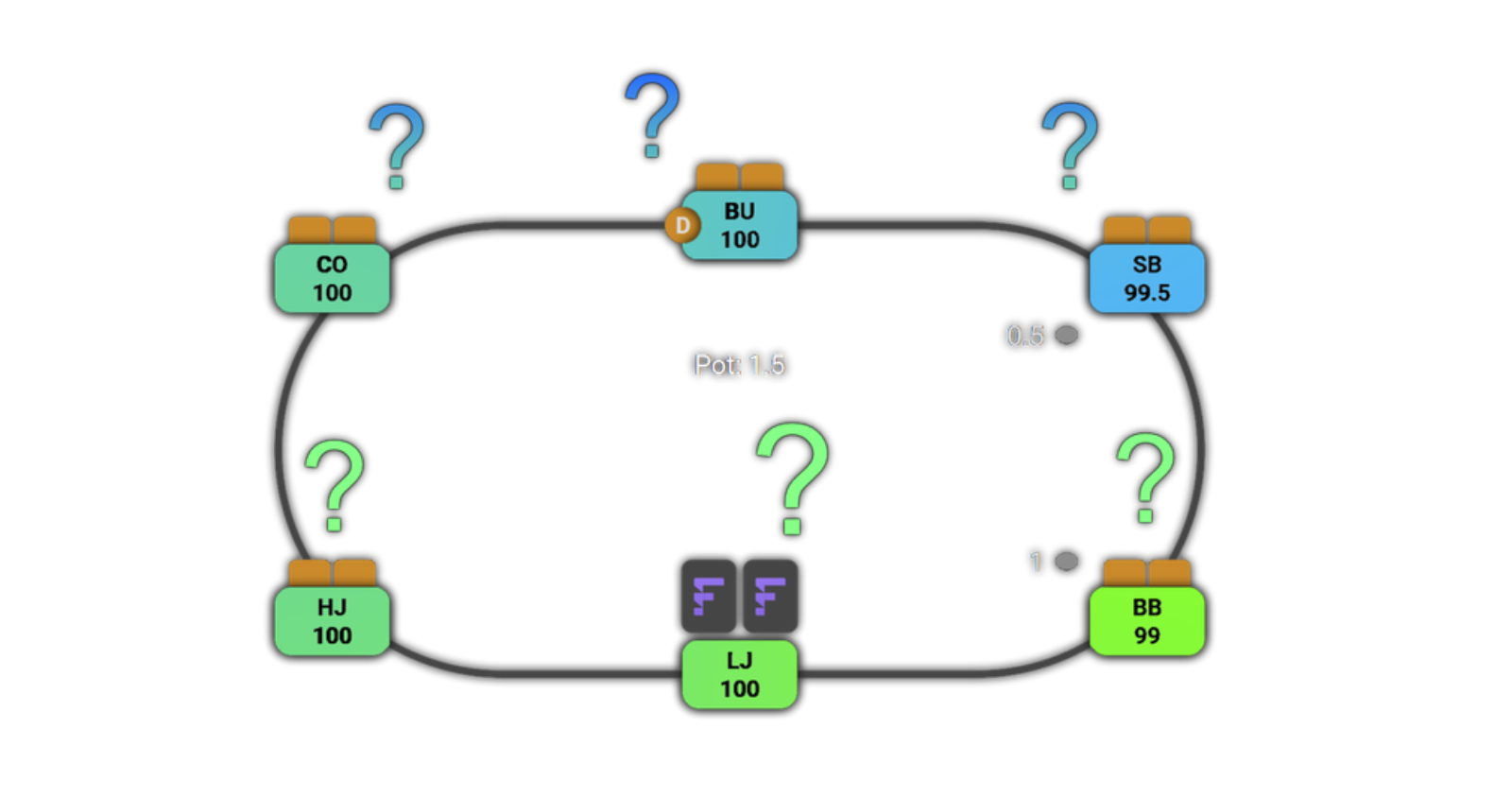
When beginners sit down at a poker table, they think about the cards. Which hand is stronger? What do these symbols mean? But experienced players think about something else first: position. Specifically, when exactly in the hand they’ll have to act—before others or after. That’s what determines how wide you can play, how comfortable your decisions will be, and how much money you’ll make at the table. In this article, we’ll break everything down from scratch: what positions are, why they matter, and how to use this knowledge right at the table.
Let’s start with the basics: what is “position”?
When you sit at a poker table, you have a seat. And that seat isn’t just “where you sit.” In poker, your seat is called your position, and it determines exactly when you’ll act in every hand.
Imagine playing a guessing game like “Guess Who?” where you identify a character based on clues. If you act last, you’ve already heard everyone else’s questions and gathered more information. That’s much better than going first blindly.
It’s the same in poker: the later you act, the more information you have. And more information means better decisions and more money.
The button: everything revolves around it
The central element of the position system is the button (also called the dealer button or simply BTN). It’s a small disc on the table (D) that indicates who is “dealing” the cards.
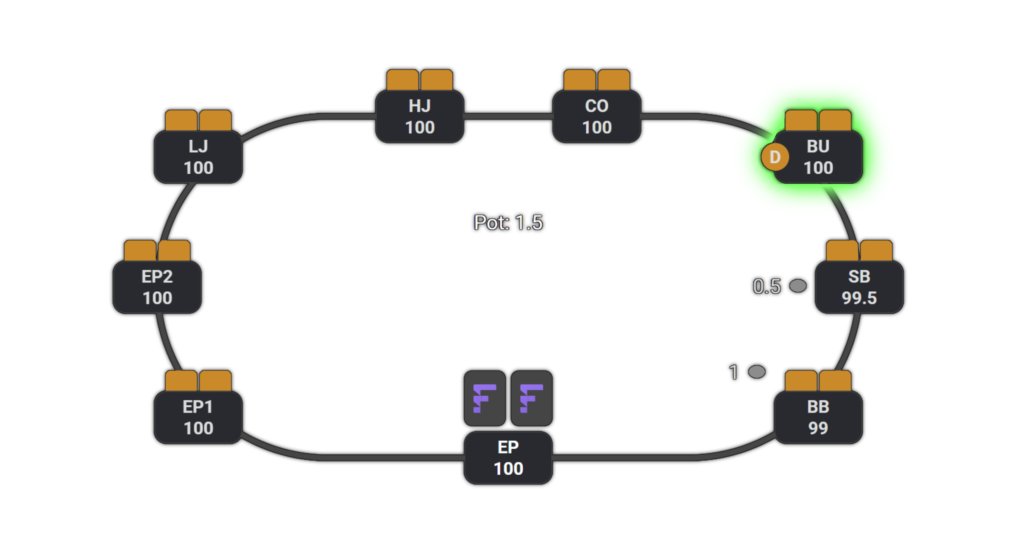
The button moves clockwise after each hand. This means your position at the table constantly changes, and over several hands you’ll play every position.
The key rule: the player on the button acts last on the flop, turn, and river. This is the most profitable position.
All positions in order — simple and clear
Let’s go through each position. We’ll follow the order in which players act preflop (before the community cards are dealt).
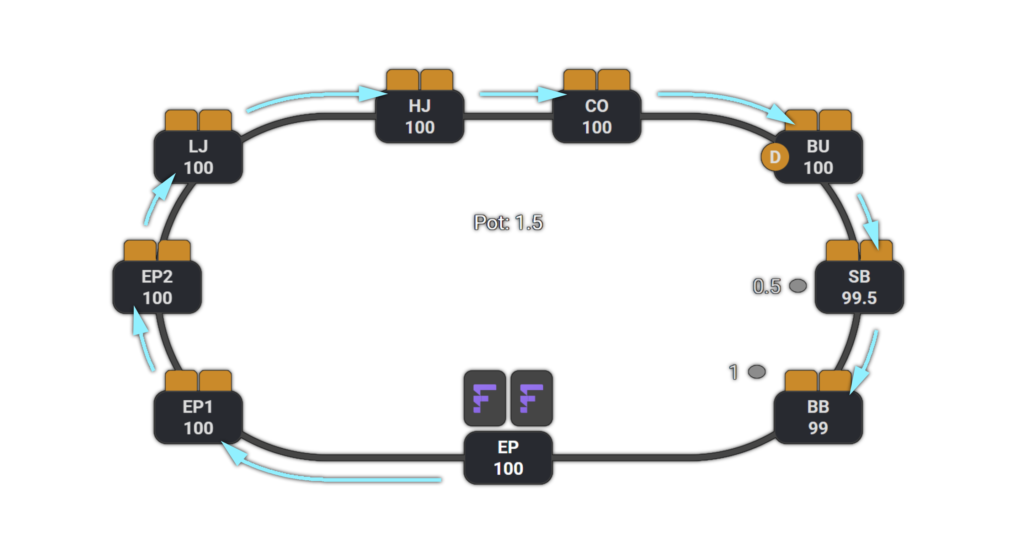
EP — early position
This player acts first preflop. There are still many opponents behind who can raise or call. EP makes decisions almost blindly—without knowing what others will do.
Practical takeaway: from EP, play only strong hands (big pairs, strong aces).
EP+1,EP+2, LJ, HJ — middle positions
These players act after EP. With each seat, there’s one fewer opponent behind, which slightly improves the situation. Your range gradually widens.
HJ (Hijack) is two seats before the button. This is where things start to get interesting: you can open a bit wider.
CO — cutoff
One step away from the button. A very strong position! Only the button and the two blinds are left behind you. If everyone folds to you, you can open quite wide.
BTN — button
The best position in poker. After the flop, you always act last—you see everyone’s actions before making your decision. From the button, you can play very wide: around 40% of all hands.
SB — small blind
Sits directly after the button. Preflop, it acts almost last—which seems similar to the button. But this is misleading: on the flop and beyond, SB acts first. That’s uncomfortable because you have to act without information about your opponents.
BB — big blind
Acts last preflop. Sounds good—but postflop, BB also acts early. However, BB has a small bonus: it has already posted a forced bet, which makes entering the pot mathematically a bit cheaper.
Why this matters — explained with an example
Take the same hand: J♦ 9♦ (jack-nine suited). It’s a decent hand with straight and flush potential.
Situation 1: You’re in EP in a 9-max game. There are eight players behind you. You open with J9s and immediately face a 3-bet from a player behind. What now? Most likely, you fold—your opponent probably has a stronger hand. You lost money by opening from a poor position.
Situation 2: You’re on the BTN. Everyone folds to you. Only the small blind and big blind remain. You open, and if someone calls, you’ll act last on every street. Here, J9s is a very comfortable hand. You’re in a favorable position—you can bluff or realize your equity and build a strong hand.
Same hand—two completely different outcomes. All because of position.
A simple rule for beginners
Remember this practical rule: the earlier you act, the fewer hands you should play.
This doesn’t mean you should sit and wait only for aces. It means you play around 15% of hands from EP and about 50% from the button.
Here’s a simplified cheat sheet:
| Position | Approx. % of hands to play |
|---|---|
| EP | ~15% (only strong) |
| LJ | ~18% |
| HJ | ~22% |
| CO | ~28% |
| BTN (Button) | ~45% (very wide) |
| SB | ~40% (but postflop is tricky) |
| BB | Depends on the situation |
These are approximate values based on GTO solutions. Exact ranges for each position—taking into account format, rake, and stack depth—are available in the FreeBetRange GTO Library.
Don’t get confused: your position changes every hand
Remember: the BTN moves. Right now you’re on the button, next hand you’re in the small blind, then the big blind, and so on around the table.
Before every hand, first look at the button: where is it? Am I acting early or late? This should become a habit—before you even look at your cards.
FreeBetRange — explore ranges right now
Once you understand the theory, it helps to look at actual hand ranges for each position. FreeBetRange is a tool where all of this is clearly visualized.
What you can do there:
Open the GTO Library and view opening ranges for the button, CO, HJ, and other positions—see exactly which hands are included in each range on a visual grid.
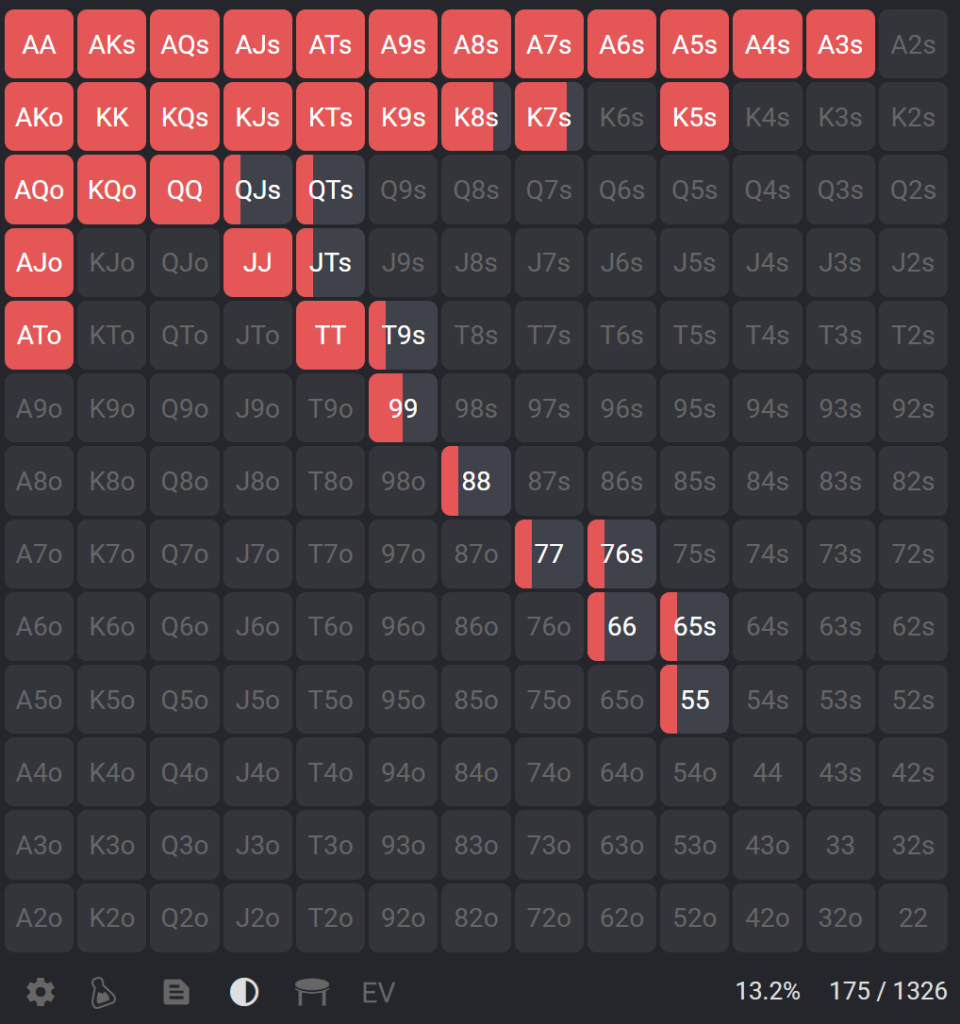
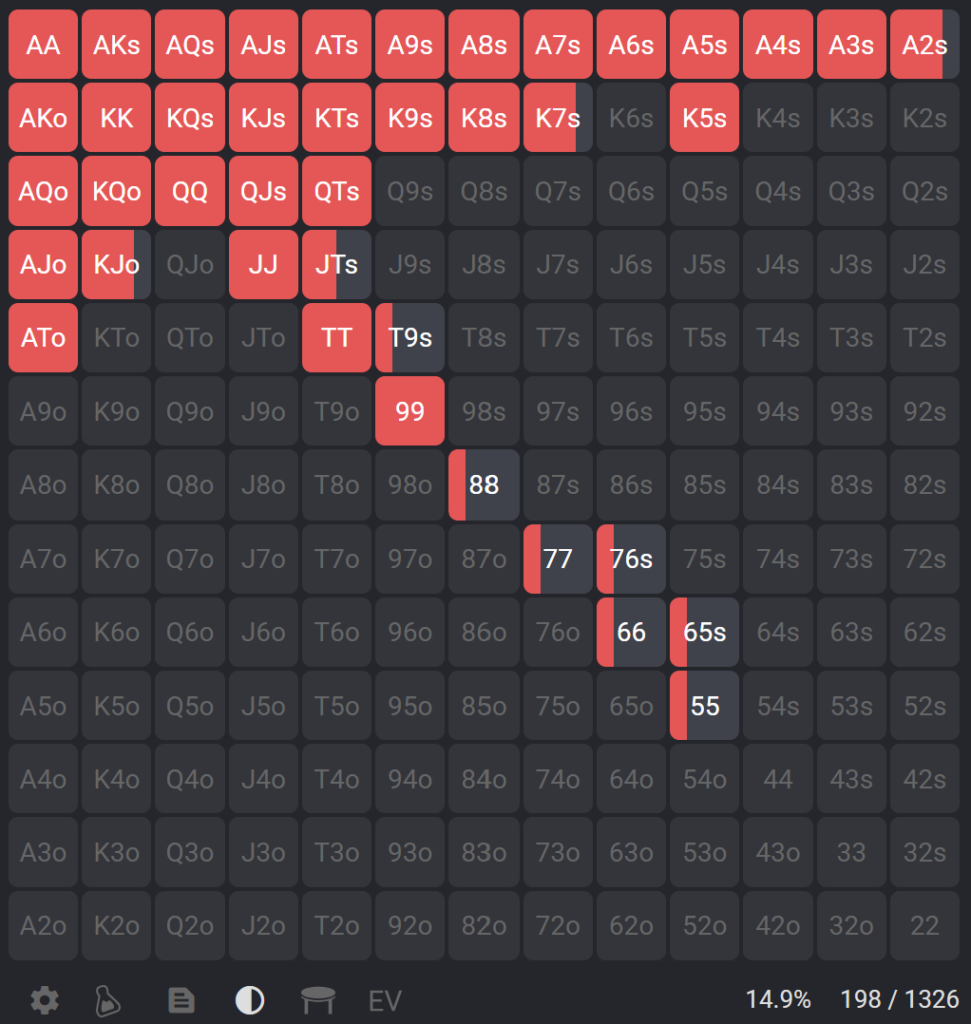
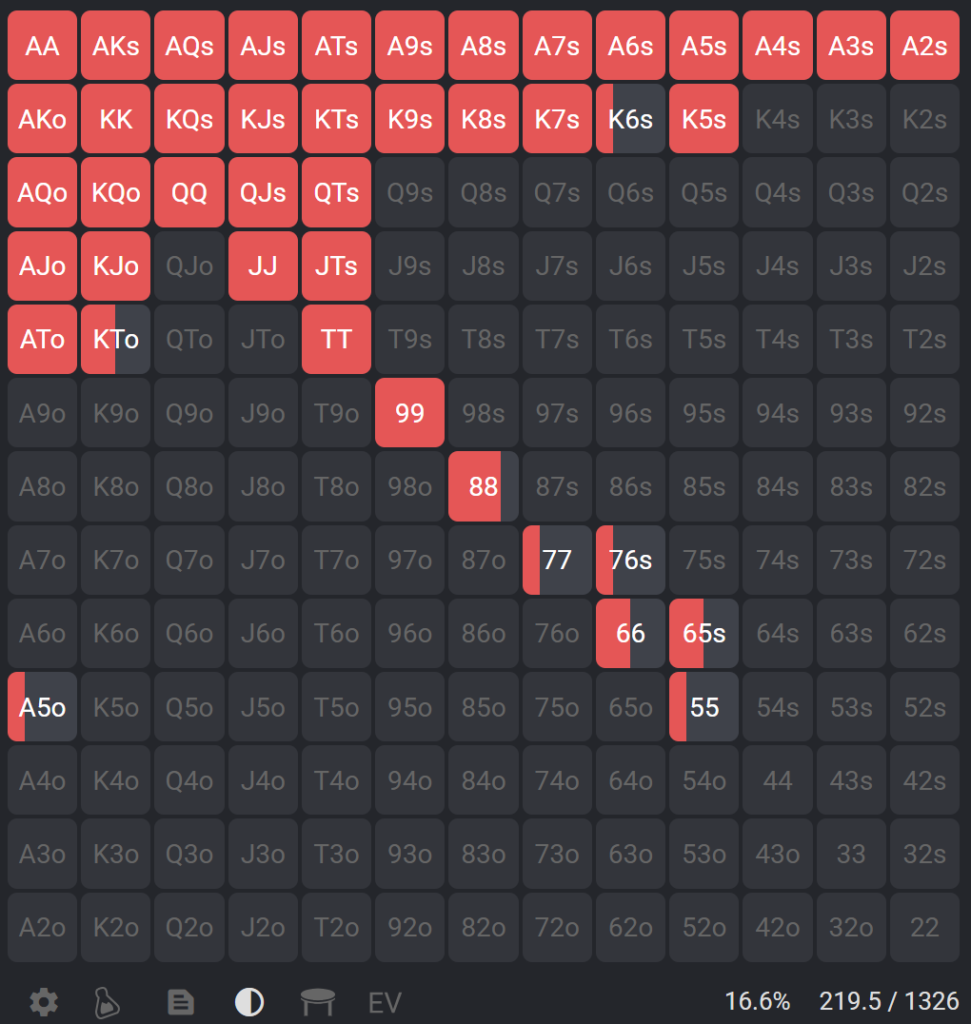
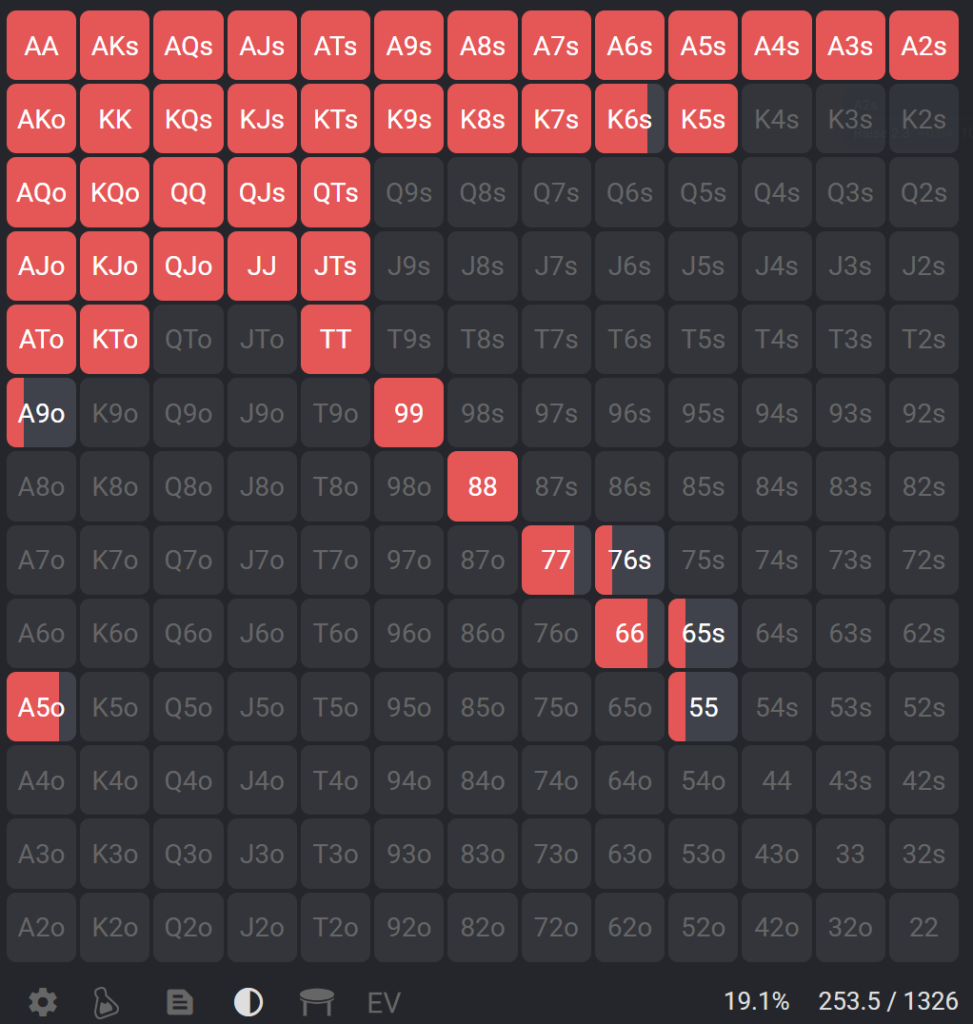
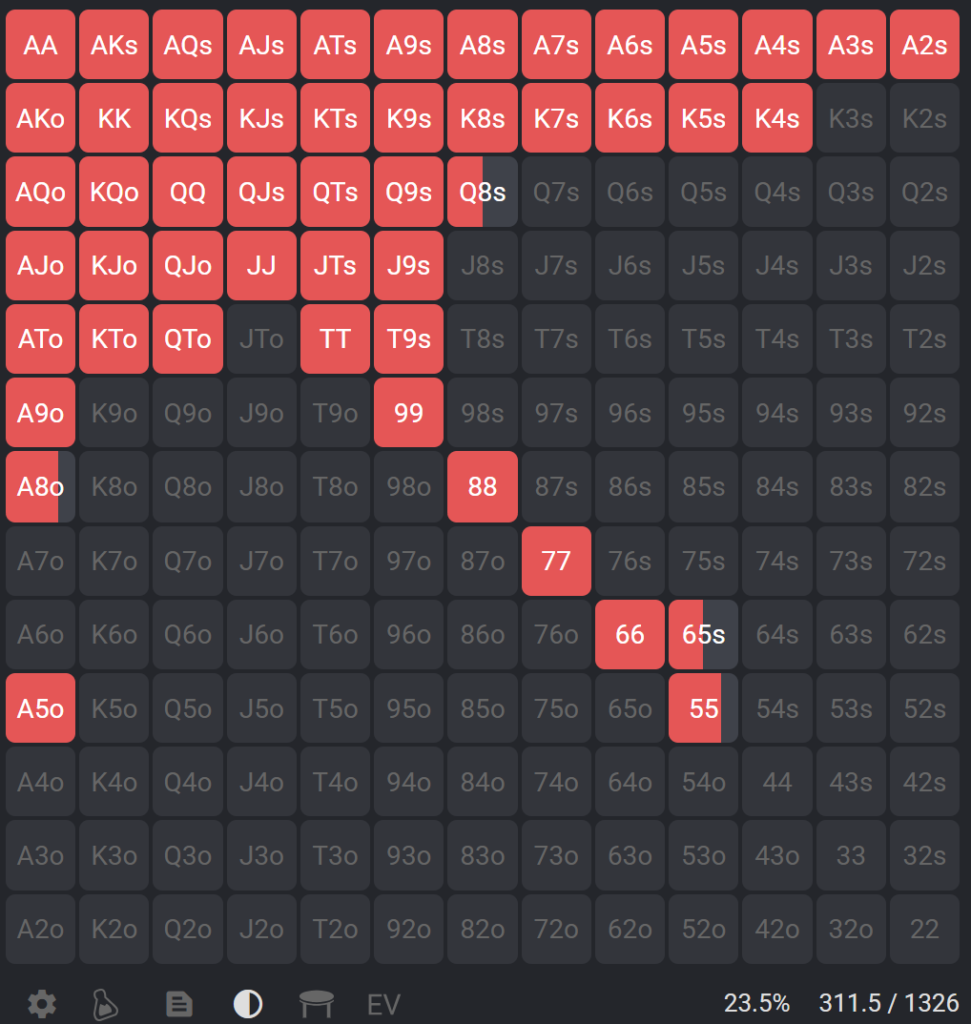
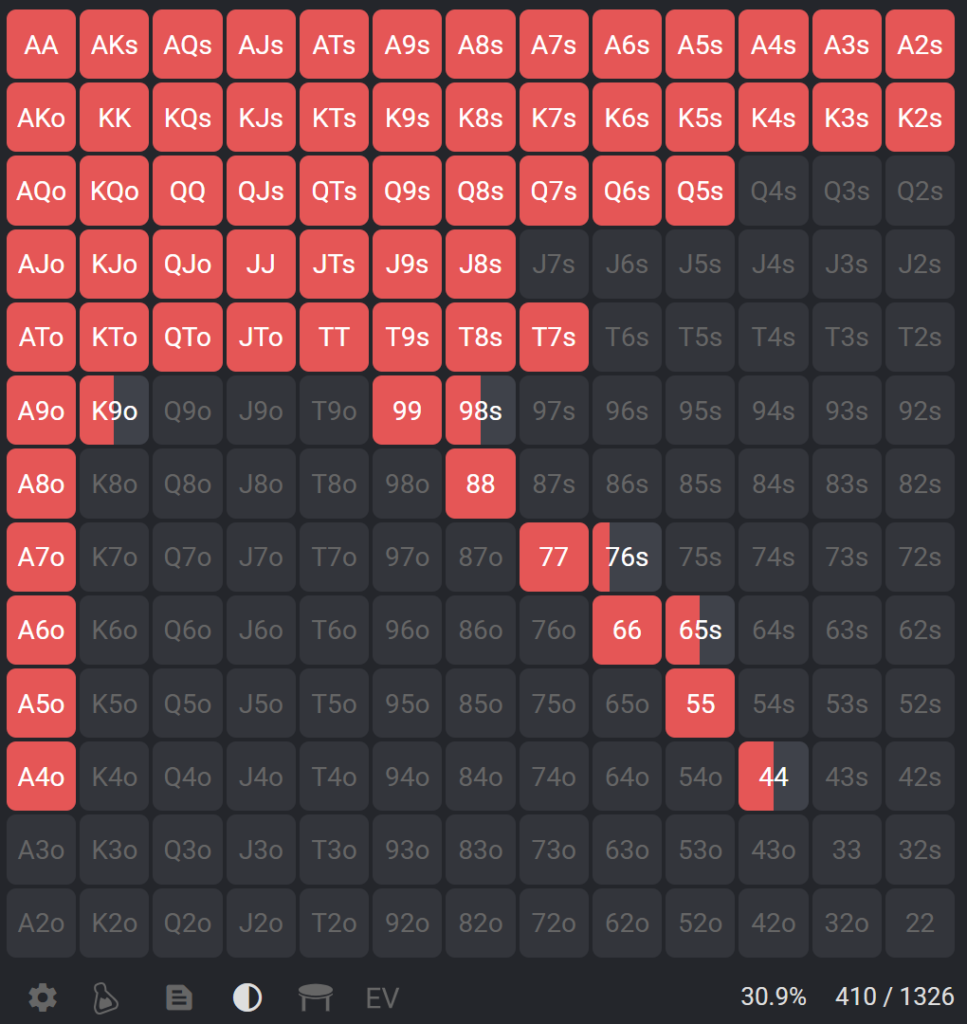
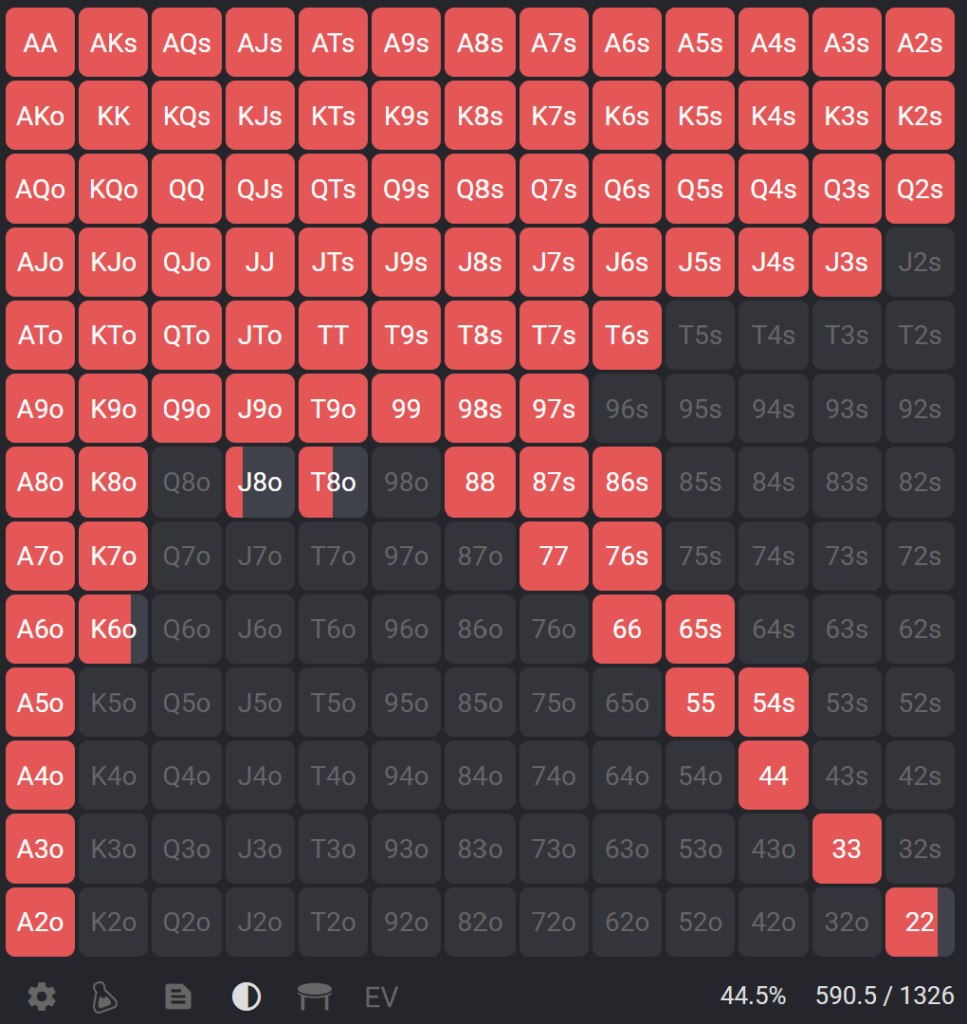
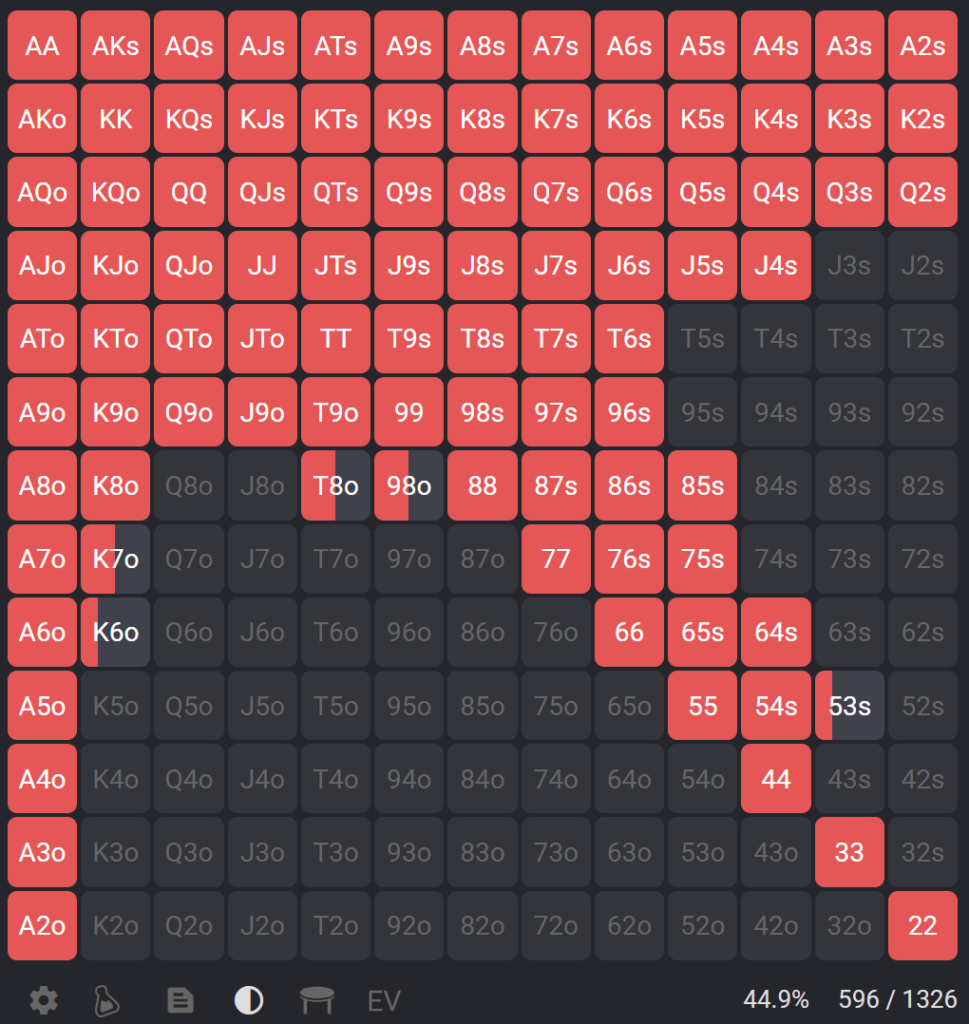
Try the Trainer: it will show you a random table situation and ask what to do with a given hand from a given position. You answer and see the correct solution. Over time, correct positional decisions become automatic—this is the best way to turn theory into real gameplay.
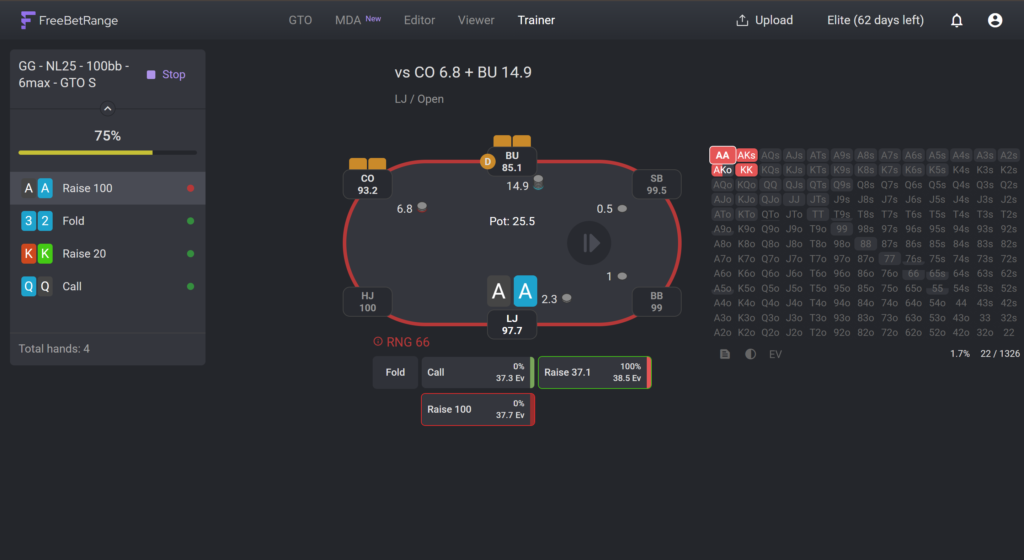
Start with the button (BTN)—it’s the most interesting and profitable position. See which hands are included there and try practicing them in the Trainer. Then move on to CO, HJ, and so on.
What to remember from this article
Position is when you act in a hand. Acting later is more profitable. The button is the best position—you act last after the flop. EP acts first, so playing wide is risky. The small blind is tricky: you’ll act first postflop. Before every hand, don’t look at your cards first—look at the button and identify your position.
Once you understand positions, everything else in poker becomes clearer. This is the true foundation.
Master GTO preflop strategy, build your own ranges, and train smarter — all in one powerful tool.
Try FreeBetRange